Tuesday, June 23, 2020

Gory Details

So, I was in class the other day.  Well, I'm in class every weekday these days, so perhaps that isn't terribly helpful, but we were talking about skincare.  That might sound like it's going back to my Bath & Body Works times, when I tried to find people the right kind of scent to match their preferences, but, nope, we were looking at a LOT of pictures.  By the time we got to the full-thickness pressure injuries (not a Google search for the faint of heart), I was very much ready with questions when the instructor was ready to leave space for them.  I asked about packing wounds, a bit on debridement, and we discussed the mechanics honestly.

And in my excitement, I had a thought that sliced through, shining like a brilliant beacon, and I basked in a moment of beautiful light.

In my head, I had been already apologizing and ready to help the conversation move on to another topic.  I...didn't have to do that here.  My curiosity was welcome here.  I didn't have to shut down that joy in learning.  I didn't have to worry about changing the subject because it was making someone queasy or uncomfortable.  That energy was welcome here. My weird questions like "can a person with an ostomy take a suppository?" or "how would you take blood pressure for someone without arms?" or "how do you pack a wound in x situation with y drainage?" are welcome in these places.  My fascination in how the body is working on a functional and cellular level doesn't automatically make me a weirdo and/or serial killer. 


I'm often the guy in the middle
That part of me is welcome here.  I can be fascinated and talking in long, rambling sentences about my new discoveries and dive deep into how the body works and what happens when the body breaks down and I didn't have to stifle that part of me or swiftly change the subject.  There have been pockets of persons, but I haven't felt this particular license in such a large group in a while.  And it is beautifully freeing.  

Tuesday, June 16, 2020

Blood Rules

We're settling into an interesting groove, now, with the nursing program, and the most complicating piece of the whole process is how we try to find a way to preform the mechanical skills and receive feedback about them while everyone is online only.  This process involves lots of awkward camera angles, pretending, use of stuffed animals, videos, and no small amount of creativity.  I did a recording of myself a week or so ago with my brother as the patient I was helping turn to his side and I told Andy his role was to be bedrails, placing his arms down next to Mike to make two ninety degree edges.  I used my lapdesk as a backboard to help the patient onto the stretcher that we didn't have.  Changing the sheets in an occupied bed involved a couple of fitted sheets on an easy chair.  And oddly enough, we had fun with it.  Some of the banter during the bedbath was the right kind of ridiculous, in particular; Andy was happy to be my pretend patient for that one, until it occurred to him I was going to be professional about it.  

As we look into procedures and their pieces, I have made three important observations.  

So there is the book way of doing things, the step-by-step process and why each step happens in this order as opposed to any other and why it needs to be done.  There are parts that are left intentionally vague, stating that different facilities will have different policies.  This leads to an important realization:  these steps are composites, the culmination of practices and policies from all kinds of different places and attempts to be applicable to all of them at once and account for all kinds of different scenarios at once.  Inevitably, some are left out--for example, the rectal suppository steps didn't have much to say about ostomies, which caught my attention because I was looking for it specifically.  (The answer, by the bye, is it depends somewhat on what it is, but in my case since I have no anus and no rectum to speak of, we'd be looking into a different route.)
And then we had some discussion in lab, where our instructors have stated in different words that there a lot of these steps that we will be doing simultaneously in the future or we will otherwise be moving with the situation at hand (i.e. if your patient can't breathe well, trying to get a laundry list of questions completed as the first step every time isn't exactly feasible).  In a couple of steps, some have even said directly that "no one does that in the real world."  This means that there is the book way of doing things and the real world way of doing things.  

Then the medication chapter hit.  Suddenly, the book way of doing things and the real world way of doing things took on a severe and marked parallel.  Giving a bath, that can move with the situation and the patient's need to rest and what materials you have on hand.  With medication, there is no playing around--those rules are written in blood.  Every rule is there because someone's direct or potential suffering brought it to the table.  Even the tone that our instructors brought to these areas shifted:  most everyone knows a story of when the blood rules were not honored and the calamity that followed.  And that sounded more Lovecraftian than I meant it, but, truly, where someone did not do the proper checks and what happened or what could have happened, there are some truly horrifying possibilities, elder gods aside.  

So in short, regarding all of the mechanical pieces that I will be expected to perform as a nurse, the following three things appear to be true:
1.  The book rules and guidelines are composites, an average to establish a pattern and the best collective way to perform a task.  
2.  The real-world way allows style and preference to come in to play, provided it stays within certain parameters.  
3.  Anywhere the real world way and the book way are in lockstep with one another, these are the blood rules that must be adhered to with reverence and no small amount of fear.  

The tricky part is right now I don't know which parts are blood rules and which ones allow for style--the book way is presented as the blood rule, and I won't know otherwise until I have some experience, meaning that I need to assume all rules are blood rules.  Some parameters can be moved, but at this point I need to assume that they cannot be, until I am hired by an institution that directs for a particular variation or evidence leads us to make some necessary changes.  In short, I have to feel for the right places to be flexible, but assume a constant rigidity, which is an interesting balance of thoughts while still mimicking the person we're following as best we can.  

It's going to take some practice yet.

Tuesday, June 9, 2020

Update #2465 Beta

Already in week four of my nursing program, meaning that I'm a third of a way through the summer.  

I still feel like I'm going to wake up one morning and clock back into my old job.  It's just...weird.  

So, how am I doing in the program?  Great question.  Glad I pretended that you asked.  


I am pendulating hard right now.  I have moments where I feel ready and confident and certain and "hells yeah, I belong here." And then I have moments where I wonder why ANYONE would trust me with the well-being of another living thing, and I feel my stomach roil and churn under a quiet smile.  I have the first slew of tests under my belt, now, so at least some of the "you don't belong here" element is calming slightly.  Both of these states are fine on their own--I have the coping to work within both--but the violent oscillation between the two of them, whipping back and again between the two of them, that's exhausting.  That's where I'm tired.  

I mean, there were twenty chapters of reading to do for the first week, but, again, it's the circumstances coupled with this steady wearing-down that makes the tired hit a little bit differently at the moment.  

There are lot of things happening in our world right now that I don't feel I have the emotional capital to address to the degree that A) I would like to and B) that they rightfully deserve, particularly when silence is taking the side of the oppressor.  And thus, the world and what's going on with it adds another dimension to the pendulum swinging, the "how can you be worried about yourself when there is so much injustice in the world?" direction, too. And on the X, Y, and Z axis, whelp, it gets all the more dizzying.  
Or maybe something more like this
In short, I'm adjusting.  There's a lot to suss out with this change, yet, and I am confident that I will find my feet in time in the same breath that I can be gentle with myself while doing so.  I am thoroughly determined to learn as much as possible with this opportunity and have specific goals in that which will be accomplished, one way or another.  There will be different, unexpected blocks along the way, and I will be allowed to be frustrated in those moments while still ultimately confident in where I will be--all pieces exist in the same space, and I'm allowed to feel the complexity of that.  There will be peace as the swing arm slows down a bit, and there will be grace until it does.

Tuesday, May 26, 2020

COVID-19 is a Pothole

Imagine this: the world and time is a road and each country is a car on it.

There's a massive pothole on the road--I mean, the shatter-your-bones kind of massive but not an actual sinkhole yet, that you can still drive over it.

Some cars didn't know it was there, drove right over it and needed to stop and assess their car, maybe fix their alignment or even getting a new tire afterwards. They tell other cars about the pothole.

Some cars make plans to avoid it as much as possible, which may add several minutes to their commute and be otherwise inconvenient, but they make steps. Other countries say they have to save that bit of time or that it can't be that bad and take the same path. Of these cars, some will take the precaution of slowing down a bit, while others still careening toward it--certainly their car is tough enough to handle it.

The US A) had warning from other cars, B) decided to go down the same path for convenience, and C) hit that pothole fast and hard.

The pothole, though, isn't the only factor: if you have not kept good maintenance of your vehicle, the impact of the pothole will have a much greater effect. COVID-19 is a massive pothole, yes, but how much we suffer from it depends on how well we've maintained the systems of our country. COVID-19 has exacerbated and revealed the flaws in our undercarriage, the rust and degradation of a flawed healthcare system that fee-for-service and inflated prices has wrought upon us.

We're hitting this pothole hard, yes, and it has sidelined our car, but the extent of the damage isn't because of the pothole--we've got the car up on the lift and there's a lot more to see and fix, here, than we realized, even if the stereo and the security system were doing fine.

Some folks are insisting that the guy at the shop is just exaggerating, trying to fleece us, even while the engine sputters and the car always drifts to the right and the miles per gallon has gone down significantly and there's an odd ka-clunk every now and again. Continuing to ride in the car as it stands is dangerous--carbon monoxide is filtering into the passenger compartment, and some people will asphyxiate faster than others. Carbon monoxide poisoning hits depending on a few factors--is it worth letting the children die in the backseat? The cost of not fixing this problem is unquantifiable. We should not get back into the car until it is safe to do so. It is going to cost money, time, and effort to fix this--we will need to reallocate parts of our budget to get going again, just like we would in the household budget. There are reasonable ways to do this that do not take out from other car systems (that is to say, we can easily preserve social security, medicade, etc.). What good is a top-notch security system on a car that doesn't run safely?

We need to start by admitting there's something wrong with the car. We have to do better maintenance on our car. We need healthcare and infrastructure systems that have people at the heart of them. With healthcare primarily tied to jobs, then a wave of unemployment, AND exorbitant healthcare costs that have ballooned to ridiculous levels, we have a much clearer view of the engine than we did before.

We can do better. We must do better. The passengers are going to keep asphyxiating until we do and especially if we keep careening toward the same pothole again and again. COVID-19 did not cause all of these problems, rather it reveals the extent of the damage we have done to ourselves through negligence and poor prioritization.

Tuesday, May 19, 2020

Dreams and Aspirations

So, as I have been transitioning from one part of my life to a new one--namely leaving my position at Skyward to pursue nursing--I've had some folks say in their congratulations something to the effect of how proud they are of me for following my dreams.  

There's something about the phrase "following my dreams," that makes me weirdly uncomfortable.  In the moment, I'll appreciate the sentiment from the well-wisher, certainly, but it's still something that's weighed on my mind, why I have an aversion to the phrase and why I find it so unsettling.  

Here's what I've come up with so far:

  • The phrase has been cheapened:  I have seen "follow your dreams" on enough bumper stickers and murals and inspirational pandering to be a bit sick of it.  I have heard folks refer to working toward their dream job and enough other similar places that it has lost meaning to me.
  • Personal bias:  I had a dream car.  It was a yellow VW Bug.  Drove it for the last year of high school and all through my years at Knox and into ISU--unfortunately, I hit a patch of black ice one winter and tried to make friends with a semi truck, but it was a good little car to the end.  However, I distinctly remember my father saying something to the effect of "now you have nothing to look forward to!" when we bought it.  A joke, yes, but something still to ruminate on.  I have no other "dream car" lined up nor a push to get any other specific car in the future.
  • "Dream car/job/house/etc." is too concrete for me (personal bias II):  I recognize through my own experience that life can turn a lot of sharp, sudden corners.  I had thought I was going to be a high school teacher--my health needs broke that timeline.  I will always teach, just not in the context I had thought.  What does that mean?  A dream is a checkbox.  A concrete, resolute thing.  I don't much like concrete things--Andy has no small amount of consternation trying to get me to a simple yes/no statement at times, for the ways that I will try to leave space for odd contingencies.  For example:  "What's your favorite color?"  "Depends on what I'm looking at."  "Do you like tacos?"  "Most of the time, yes."  "Would you like to go out for dinner tonight?"  "That will probably work."  "Can you give me a straight yes or no?"  "It's possible."  There's a lot of grey in the world; I like to acknowledge it where I can.  More on this in a moment.
  • Not everyone has a checkbox dream:  There are some people who have always known what they want to do and be in their life.  Great for them--I'm excited for them.  There are others that feel like they are inadequate for not feeling the same.  I don't want to encourage that feeling of inadequacy, when everyone may have a different path for how they approach life, career, love, and all else.  
So, I prefer to say that I don't have dreams, that I have aspirations.  I know that the denotative level doesn't have a lot of difference, perhaps, but connotatively the way I see it a "Dream X" is a firm something whereas an aspiration is a direction, an ideal to aim for.  Dream X fits in a box.  Aspiration is allowed to grow and change with time and circumstances.  In Project Management terms, a dream is the client coming to you saying "I want X and it should perform like Y and look like Z," and an aspiration is "the problem we need to solve for is X; what ways can we solve it?" to find a new solution that works best for the most people in a new way that no one had created before.

I have an aspiration to help folks and in particular to show compassion to persons with ostomies and/or other traumatic life changes associated with medical trauma, including a level of advocacy.  The rough shape I have in mind for meeting this entails becoming a nurse.  But if tomorrow I'm hit by a bus and could no longer perform the role of nurse as a result, I would still find a way to meet the looseness of the aspiration.  The shape would change, but the ideals and the goal are perfectly intact.  I don't feel like a "dream" covers that space.  

I want my future to be liquid.  A liquid bends and curves and moves with the changes.  A solid crumbles with time or cannot fit quite so well around certain corners.  My trauma has taught me not to trust the path to be clear and free (while still trying to make safety nets for emergencies as possible), but at the same time, I usually am quite certain what at least the next step is.  This has been a pattern for me, not knowing the destination but having a relatively firm direction on the next step.  It allows for pit-stops as needed; it allows for a tangent as needed; it allows for drastic reshaping; it allows for a freer schedule to let serendipity happen or respond to problems as need arises.  

In other words, the work won't be over when I get my BSN.  The work won't be over if/when I get my WOC certification.  The work won't be over when I have a position as a nurse that allows me to utilize said certification.  Rather, I will hopefully be empowered to find that next step to better meet the needs of others, meeting a particular need in myself.  
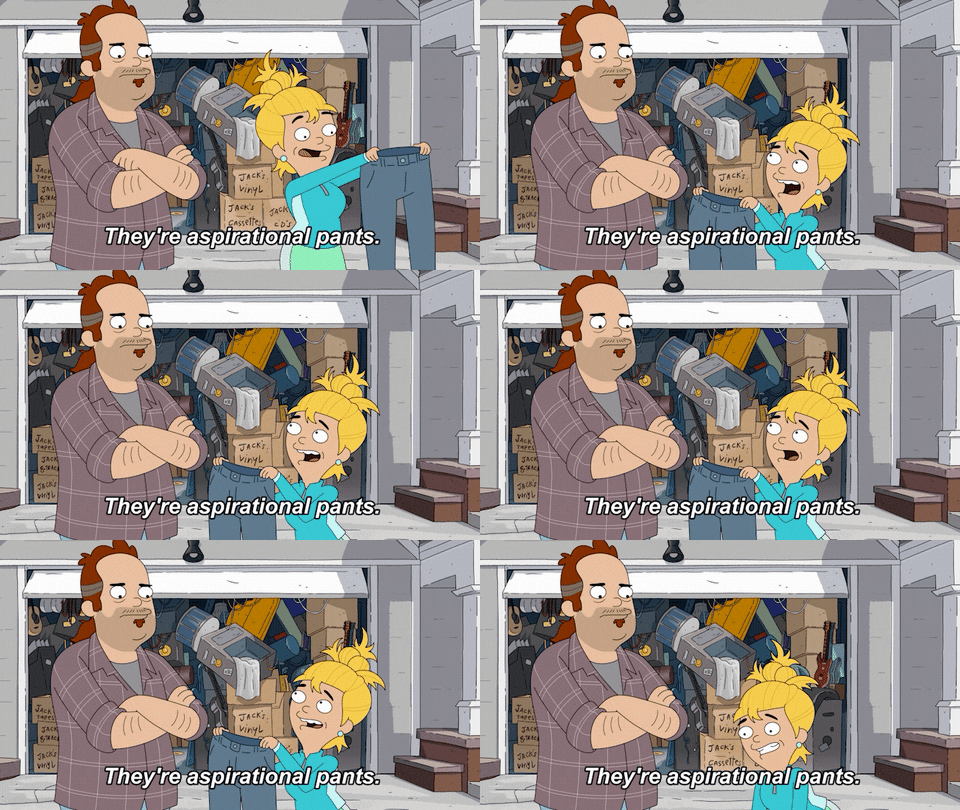
Okay, I don't know the context of this at all, but
it made me smile.
BONUS SLOTH GIF

Tuesday, May 12, 2020

BTS: Nursing Prep

I mentioned in a previous blog post that this whole process of getting into the ISU nursing program had a number of steps.  Let's hit the highlights with a bulleted list!
  • Applied in February of 2018
  • Found out I was accepted into the accelerated program in August 2018
  • I was missing four of the prerequisites that I would need before program start, May 2019 in theory meaning two courses per semester on top of full-time work
  • Andy had just changed jobs--based on that and obligatory pace of the remaining prerequisites, it made sense to defer and I declined to take part in the program that year
  • Resolved to reapply February 2019, but started remaining prerequisites through Heartland Community College, one class per semester until theoretical new start (since there was no guarantee to be accepted again nor option to defer)
  • Reapplied in February 2019
  • Bought a house
  • Manager above me retired--applied for that position
  • Accepted the manager position in August 2019
  • Two weeks later, was offered a spot in the 2020 accelerated nursing program
  • Paralysis of indecision--it was a really sucky week
  • Put in my grateful acceptance into the program, having finally given myself permission to pursue what was right for me; mentally started preparing myself for the emotional changes ahead
  • Continued to work through remaining missing prerequisite courses around work schedule
  • Paid off all of our remaining student debt (yes, with full knowledge that we would be incurring student debt all over again)
  • More math; lots of math and spreadsheets
  • List of necessary health and other requirements steadily worked through, including booster shots, new vaccinations, forwarding of historical vaccination records, TB test, and CPR class
  • Orientation meeting in January with additional information dump prior to program start
  • Ordered my first set of scrubs with ISU patches
  • Drug test and criminal background check--in the drug test, I was initially told I was "too hydrated," which I think has only been said to three people in the world ever (I normally aim for three liters of water a day...)
  • COVID-19 changed my in-person class to an online class and my in-office job to a remote job
  • Attempted to sign up for classes for that first summer semester, which involved eight emails and a couple of phone calls to sort out what the hell was going on
  • Cried internally when paying for the first load of textbooks, for several reasons--my back, my wallet, and my excitement
  • Made the news known at work
Being able to tell my coworkers and higher-ups sucked, definitely, but it was also very freeing.  I value transparency--at work, I preach it wherever relevant.  So to be preaching transparency while also holding back this huge part of my life and myself, I have been feeling inauthentic for months now, and especially as May 2020 steadily moved closer.  I couldn't really blog about it without breaking some serious social protocol or otherwise playing my hand sooner than I wanted to do, which means I have been denied one of my best processing tools in parts of this transition.  I have written out some pieces (though now largely irrelevant) or talked a few things through with a few trusted sources, but mostly I have been working to catch up on some of this processing now.

What's particularly tough about this, though, is that we've been preparing for a significant life change all of this time, for years now.  In my mind, I've been comparing it to pregnancy:  preparing the space, gathering all of the tools that we'll need, putting our financial affairs in the best order that they could be, finishing any projects that we could beforehand (or otherwise establishing priorities), going to a few extra doctor appointments to ensure that all parts of me that could be addressed were addressed, and emotionally trying to prepare for life to be different after a specific day arrives.  Just without a socially acceptable space or way to talk about it--society at large has patterns for how to properly be happy for someone that is expecting, but this doesn't translate necessarily well to folks embracing other changes in their lives.  I am changing a few parts of my identity, becoming more of who I am.  There's a lot yet to process with that.  

Here's how it starts:  leaving work on Wednesday, attending orientation on Friday, and then classes starting on Monday!  

And there will be many stories yet, my friends.

Tuesday, May 5, 2020

Words and Changing Definitions

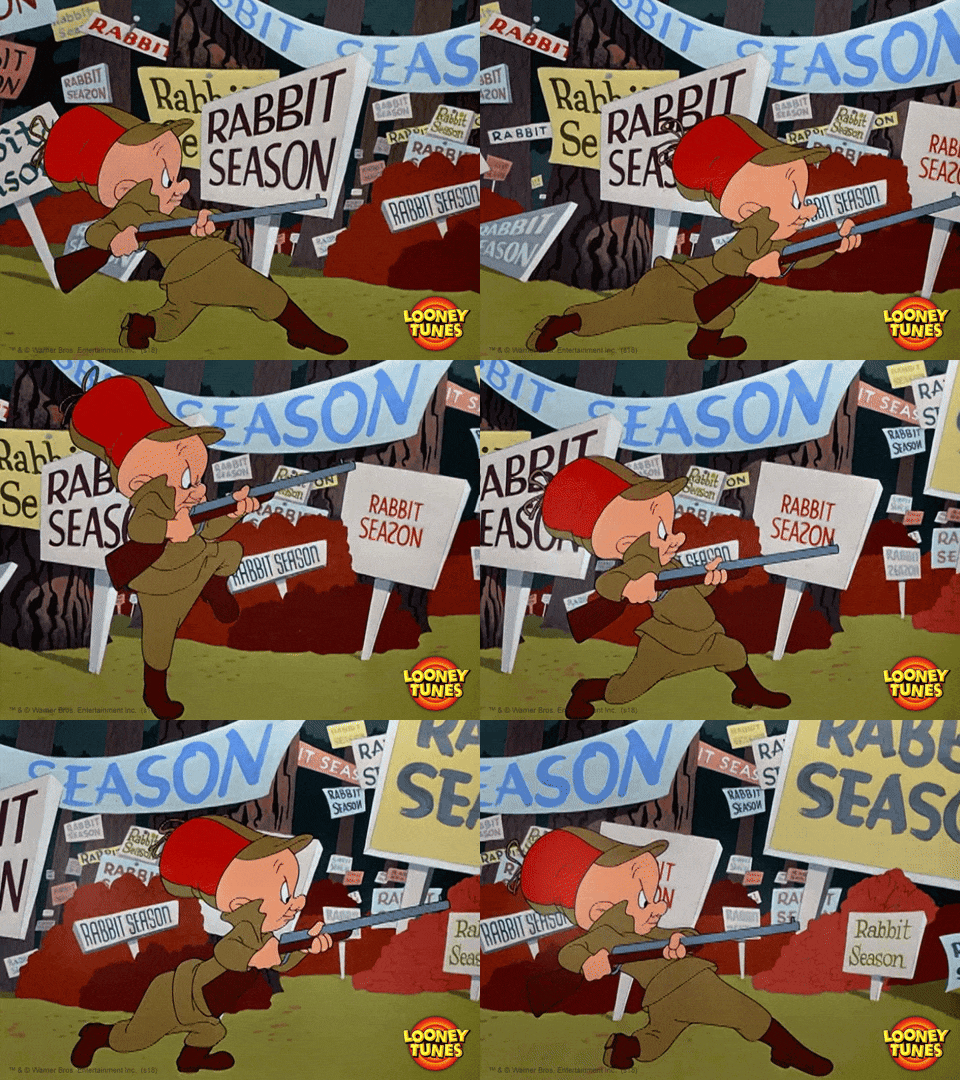
So, I want to start today with Bugs Bunny.  Or more specifically, Bugs Bunny interacting with Elmer Fudd.  
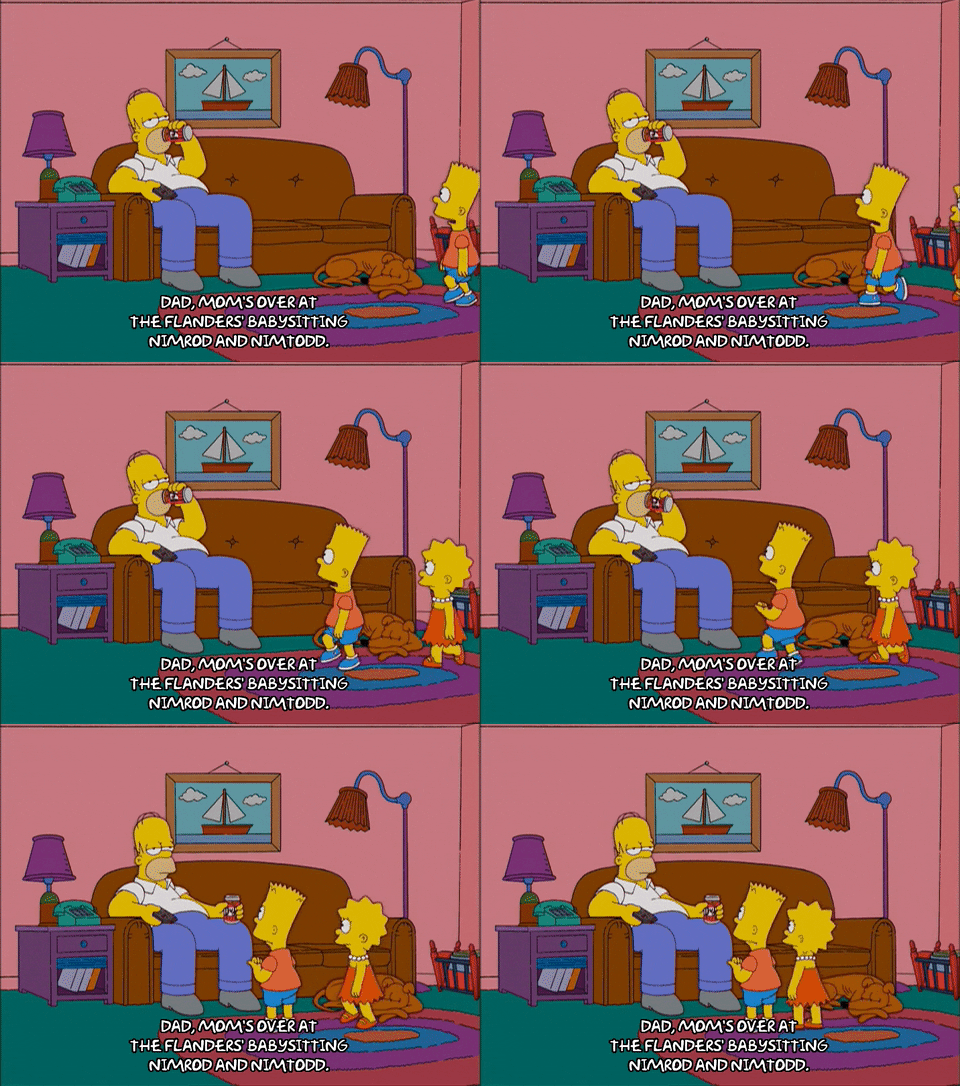
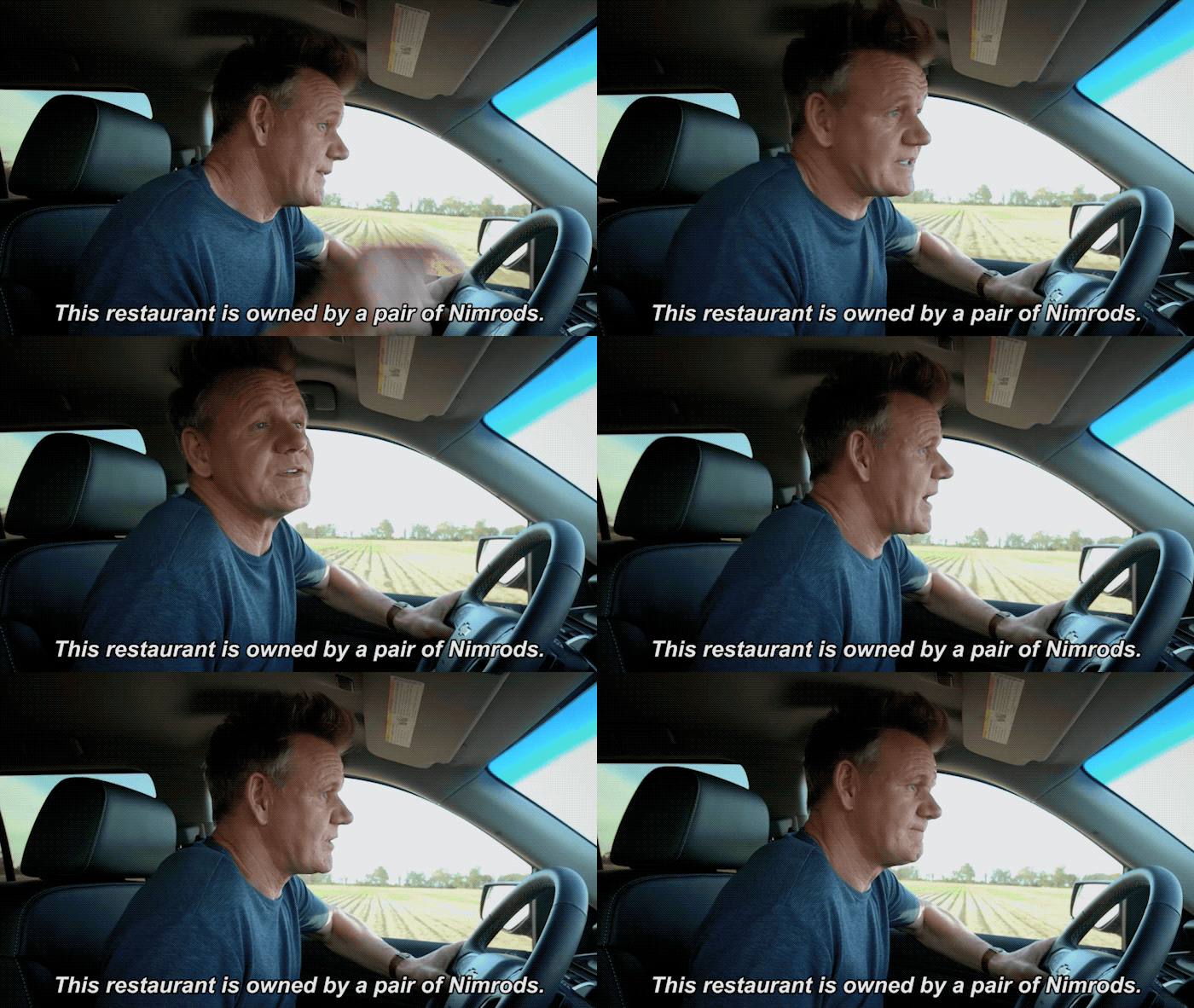
I found a meme recently talking about Bugs referring to Elmer as "nimrod."  I remember watching the particular cartoon in question and not understanding that word at the time.  I understood that Bugs was some level of disrespectful toward Elmer, meaning that, surely, "nimrod" was foolish or some kind of idiot.  The meme explained that this term actually refers to a mighty biblical hunter, meaning that Bugs was actually saying something along the lines of "What are you looking for, hunter?" which is sarcastic, maybe, but not a slur.  Basically how Bugs first addresses him in the Wagner opera piece ("Kill the Wabbit") with "Oh mighty hunter of great fighting stock..." is exactly what he's said before, if more floridly.  


Just a couple examples, I'm pretty sure neither of these are using it to mean "great hunter."  And that continues for the half-dozen other cartoon and show clips I found using the word.  

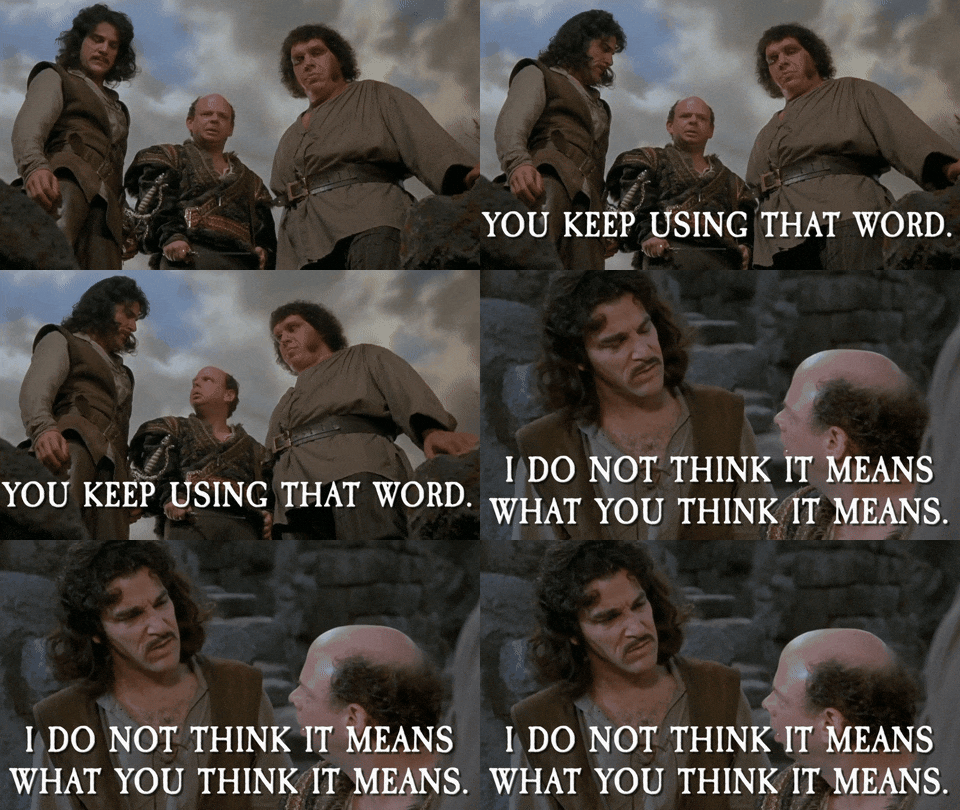
But that doesn't mean that the word, capitalized or otherwise no longer has that meaning.  It just means that its context is all the more important.  Let's take the word "nonplussed."  
In short, there are two definitions there that mean the exact opposite thing.  The word represents both.  The context is incredibly important to understand the intention of the word.  As a different example, the word "quite" has some sarcastic undertones in the UK, as I understand it, meaning that calling someone "quite pretty" in the Midwest usually means "lovely" but "quite pretty" in the UK seems to be a backhanded way to say "not pretty," but, you know, politely.    

What we're getting into, here, is connotative vs denotative language.  A word starts with a particular meaning and over time it can develop additional or slightly different meanings.  Grammar works this way, too.  With enough usage, words get added into the dictionary and grammatical rules loosen in certain contexts.  Language evolves.  Language moves.  The part that is there, in the dictionary or following strict grammatical flow, that's denotative--anyone who is strict on the rules because "thems the rules."  The kind that is looking at additional implications or following the flow of how words are spoken by native speakers, that's more connotative.  I used to be hardcore denotative, until it was pointed out to me that sometimes those rules are used to reinforce stereotypes and systemic ideas on poverty, class, and race that were not worth clinging to so fervently.  In short, I bend to the context--it something needs formal English, it's going to get it; if something is informal for a Facebook post, maybe I don't need to rush in with corrections, provided it's still understandable.  

All of this is fascinating to think about, and I want to throw one more very specific example out there.  

Theory.  Denotatively, it means a proposed explanation for something.  Connotatively and colloquially, it's an idea about how something might have happened or come about, one or a couple persons lightheartedly making a simple conclusion or in a crime drama, seriously drawing conclusions based on a few pieces of evidence and active camera shots.  

But in science, it means something much different.  In a scientific context, it's jargon.  It is not as flippant as it is used outside of science.  The way we use the word "theory" colloquially is closer to "hypothesis."  A scientific theory is a collective of hypotheses that have been tested when possible or using abductive reasoning when it is not.  Theories can be refined over time, sure, but a theory has been vetted and is continually vetted by the scientific method.  A scientific theory is not "just a theory."  It is a scientific theory, but to make things easier we sometimes leave out that important qualifier, which I suspect is how some of this confusion happened in the first place.  In short, when we talk about theory in science--a scientific theory--it has a denotative gravitas that is sometimes forgotten in the connotative context.  And yet, it does not mean that the gravitas isn't there.  

Speaking of gravitas, let's talk gravity.  Laws are a step above scientific theory.  There are Laws of gravity, that describe how gravity behaves, but how gravity is there in the first place, it's a scientific theory.  It's a collection of vetted observations, tested hypotheses, and other evidence to explain how gravity works.  I have yet to hear anyone refer to gravity as "just a theory," but we also have flat-earthers in this day in age.  

And I'm sure some of you have already connected where some of this argument may have originated:  "It's just a theory" is casually thrown against the concept of evolution rather liberally.  All this particular argument boils down to is a patent misunderstanding of a piece of scientific jargon.  In my head, it's like reducing my diagnosis of Crohn's Disease to "just a tummyache:"  it oversimplifies the concept and ideas into absurdity.  Scientific theories aren't something to "believe" in--they can have good evidence that needs to be incorporated in to potentially shift parts of the theory, but it's not a matter of belief and unbelief.  Scientific theories are used to explain parts of the observable world--science deals with the "how" something works or came to be; philosophy and religion sort with the "why."   Different questions, different tools, different words and jargon.  Using the same word to mean two different connotations is bound to lead to additional confusion, but to assume that they're always the same is only going to increase confusion.  

In short, when I hear the "it's just a theory" argument, I see this in my head:

BONUS ROUND:  How do you tell the difference between an electrician and a chemist?  Get them to pronounce "unionize."