![]() |
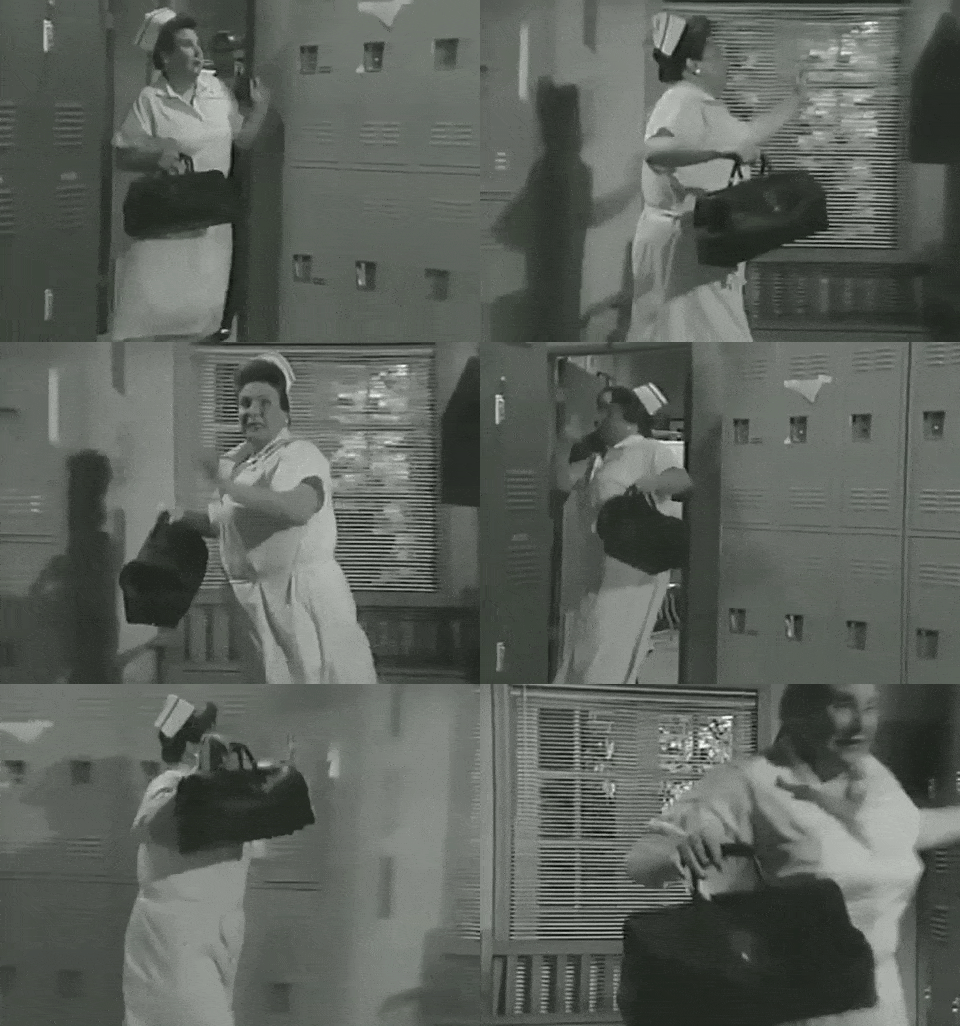
| Raring to go! |
![]() |
| Raring to... |
![]() |
| Erm... Ah, beans. |
![]() |
| Raring to go! |
![]() |
| Raring to... |
![]() |
| Erm... Ah, beans. |
I would not claim to know every nurse's reason for getting into the field. However, I have taken a small sampling and found some similar themes that include (but are not limited to) the following:
One of my favorite spaces, though, is when I am able to stop and listen to patients, honor their emotional processing through whatever else is going on and see them as a person. This is not every nurse's particular desire nor skillset--some nurses prefer their patients anesthetized (e.g. surgical nurses), and there are definitely days where I see the wisdom in that. However, there are days where that space simply is not possible. This can be for a number of reasons:
In the rest of the day, I am also expected to round on my patients every other hour (their tech on the other hours), turn patients that need turned, administer timely medications, troubleshoot and/or start new IVs, discharge appropriate patients (calling nursing homes or home health for the handoff, sometimes scheduling appointments that haven't already been made), admit new patients, teach patients about their care, perform dressing changes, notify the physician of any major concerns, and respond to any other issues in the day.
![]() |
| My internal self in the morning med pass |
Oh, and document it all.
In other words, my goal might be to be with the patient as a person, but sometimes my reality is that I have a series of tasks I have to perform with that patient, and this may be all of the space I have available to them. I leave those days feeling a level of frustration, that I was so busy performing patient cares that I may not have been able to care for the patient.
I don't like it when my patient becomes a list of tasks rather than a person, but, again, sometimes that is all the space there is, particularly when other patients on my load simply need more, in one way or another. There are times, though, when a patient is a list of tasks partly to protect myself--perhaps they are lashing out against their situation by making snide remarks to staff members: I will minimize my time in those spaces, clustering my obligations together and perform the bare minimum of interaction. I am not neglecting them by setting a boundary, as their tasks are still addressed, but it feels different. It's an interesting cognitive dissonance, to know that I am caring for people by actions even if I am not engaging with them emotionally. I do not need to be "friends" with a patient in order to feel fulfilled by the day. I can know that I am advocating them while I'm not being present in the room; I can know that I'm simply a part of the "holding pattern" before other decisions are finalized and know that this effort is not strictly needed (I cannot make insurance approve pieces any faster).
In the end, it is all a balance of resources. What emotional space I have to offer depends on how much has been used toward all of the task elements that must be completed. I prefer to have the time to see to their emotional needs, but it cannot be at the compromise of someone else's safety needs. What's left is to make peace with that.
It's that time again!
![]() |
| Wonderworks, and all the ridiculousness therein |
![]() |
| The view from the Ferris Wheel at the Island. There's actual TOPOGRAPHY out there. |
![]() |
| Andy had to get creative around some obstacles at minigolf |
![]() |
| Would just like to point out that I managed to be the top-scoring player in our round of lasertag...because I camped and sniped people. Literally have no idea what 3/4s of the place looked like |
![]() |
| The Pirate's Voyage dinner show was a lot of fun, with some wonderful surprises |
I've had these same thoughts before and yet I feel the urgency to speak about them again, namely the element of "sonder," that particularly realization that those we interact with live a life that is as vast and complicated as one's own. The hospital has cross sections of life that all manage to intersect in some fascinating ways. I mean, I know that this is technically true everywhere, but it seems more apparent in this environment as hospitalizations and new diagnoses are significant turning points for many people. So, not only are lives happening, they are changing drastically and with all the big emotions that implies which is now suddenly put into context against what they (formally) knew as normal. Weddings, graduations, new jobs, new family members, and many other significant life events are happening, even as a loved one from another family is dying in one of our hospice rooms.
One patient is worried about whether their professors will be flexible with their due dates while they are hospitalized. Another is concerned if they are going to lose their job, which is the only reason they have health insurance. Another still is contemplating how to explain to their aging parent that their needs are beyond their ability to care for them alone and they need to consider what other options are there. Another still will be following up outpatient now that they've stabilized in order to find out what their new chronic illness actually is and what that will mean for themselves and those that love them. A group from another family in hospice is so busy "helping" that they somehow fail to be present in the moment with the patient in their final hours. Another knows that their family member does best when they have a familiar face around to reorient them but also cannot get enough time off of work to be present. Another family member is completely fed up having to pick up this patient for the umpteenth time from the hospital, wishing that the patient may make some more positive changes this time. Another patient only let the problem get this bad because they could not afford anything preventative--the emergency room and admission were the only parts of their care covered.
Folks wander up to the desk asking for a cup of ice completely oblivious to what is happening two rooms over. In fact, patients and their families can be so intwined in their own situation that they seem to forget anyone else is here. These seems most true for hospice situations, particularly if the change over to hospice was sudden. Their understanding of a world larger than themselves simply vanishes. Even in less extreme circumstances, I cannot count how many times someone comes to the front desk and says something like "my mother needs to go to the bathroom" or some other similar request (a cup of ice, pain medicine, has a question, etc). I have no idea who they are, let alone who their mother is. As such, there are many points where I have to ask "who is your mother?" and they might tell me a name, but I have to clarify still "what room are they in?" because I will not be able to find someone simply based on their name without cross-checking things because even the rooms do get switched from time to time. Additionally, I won't magically know important context to their case nor specific bathrooming needs because I'm wearing navy blue scrubs--chances are, I'll need to find their nurse or tech. I will know many specifics about the patients I am assigned that day; I will not have such intimate knowledge of the entire set of thirty patients possible on our floor. Maybe I should try to look less approachable. Yet the point remains: I don't think that they're being egotistical on purpose, assuming that I know who they are because they are the only ones in the hospital but more because they are so focused on this pivotal moment that they do temporarily forget that there is anyone else outside of them.
Yet in the meanwhile, the nurses and techs and doctors are discussing the new hospital visitor policy, talking about the asshat who cut them off on the way to work, on a house hunt, wading through family drama, trying to find someone to cover them to go to their child's game that week, planning their garden for their day off, managing their own appointments and conditions, thinking about their next vacation, considering picking up additional time to pay for said vacation, sorting out how to get their car back from the shop with their work schedule, and a thousand other things.
I don't need the patients to pull themselves out of that self-centeredness, except for small moments at a time. In fact, I would encourage folks to stay in a place where they can process and feel what they need to that they might be otherwise ignoring for at least doses at a time. However, I do need enough awareness to firstly acknowledge that I have other places I also have to be and as such I am not slow to reply for any vicious reasons. I am a side character in their event. And while I am providing a service, I am also an individual with my own goals, needs, and limitations.
All colliding and intersecting, requiring uncomfortable pauses and emotional processing while, somehow, the world keeps turning outside of the hospital walls. Time moves differently in our hallways; time moves with portent and either with startling speed or as a maddening crawl. Yet, it moves forward all the same.
At this point in my Crohn's journey, we've hit a good stride and pattern for treatment. In other words, the things that I do to maintain are firmly into routine by this point. This emphatically does not mean that there are not ways that my condition is present in my day-to-day life, but instead it means that these interruptions have become normalized. This difference is important--my chronic illness is never "over" and is always at least quietly constant in my life. Quiet, but never forgotten.
Melvin, certainly, is the broadest change, needing to plan and react to my ostomy's needs in a day, over the week, over a trip, etc. I have routine doctors' appointments and bloodwork and a colonoscopy every three years. I take daily medications and have done so since I was twelve. However, one of the largest parts of my care plan is a medication infusion that I get every eight weeks. I tend to call it "going in for scheduled maintenance."
This entails feeling a little run-down a few days before the appointment itself. When I'm honest with myself, I'm not fully sure whether this is because I'm truly physically more fatigued OR if I am more receptive to a particular kind of tired that is usually ignored. I allow myself to check-in with my body on a deeper level. The whole day, even as there are other tasks, centers around self-compassion to my body.I practice self-accompaniment on these days. I am intentionally with myself. I sympathize with my own annoyance that I have to interrupt my schedule to sit at my doctor's office for an hour and forty-five minutes and get poked for yet another IV. I resonate with past moments of myself trying to schedule and arrange the next infusion around the rest of my schedule, now that I have been getting infusions of some kind for over ten years at this point. I focus on my resignation toward this interruption, acknowledging its necessity. I consider my gratitude that I have insurance to pay for the $15K bill every eight weeks, that I am no longer on the medication that takes four hours to infuse, and most importantly that this medication regime is working.
In other words, there is grief, in all its multilayered glory. Infusion days become their own ritual, a space where I am already forced to physically tend to the realities of my condition so I choose to also make it a place to emotionally acknowledge them as well. That means that one way or another, I am pretty tired by the end of the day, either because the infused medication is settling in or because I have been working internally all the same.
And then in another eight weeks it's time to do it again.
I remember reading the short introduction to the end-of-life chapter in one of my textbooks. The discussion highlighted how abrupt the shift can be from the mindset of "do everything possible to keep this person alive," over to "ensure that the person is comfortable and be present for the family." Even the verbiage around this decision point can get tricky and seems inherently negative, talking about "giving up" or "throwing in the towel."
"Giving up" can be a virtue. Realistically looking at a situation and understanding that some of the measures available would only buy a tiny bit of time for a significant amount of suffering, some of these are no longer a kindness. One particular family comes to mind, that they agreed to a temporary dialysis catheter, in the vein of "not wanting to give up," and added a new degree of misery to their situation; the patient was placed on hospice a day or so later and passed soon after that. I have seen many more languish for multiple days because the patient insisted they were "going to get better," and I was no longer able to discern whether this was performative for me, their family, or themselves.Of course, if the line were clear we would not have so much anxiety around it. The hard part is the finality, where tears blur even the clearest situations. But as soon as the switch is flipped from "what measures can we take?" over to "how can we make them at ease?", I feel a particular relief in the air. The urgency transitions to a new energy of preparation, a darker kind of anticipation. And in myself, I feel a significant shift in how I think of that patient in that room. I am more sensitive to their choices, as in I will not try to encourage or persuade a specific course of action--if the person does not feel like eating, then they don't have to, as I am no longer focused on the longer outcome; if they want to stay in the same position and not be turned, I can honor that without being considered negligent. How I include the family also changes, inviting them to reminisce and tell me about their loved one as they lived--to see them through their family's eyes--particularly when it seems they need a breath of air in their grieving process.
There is relief in making the decision. There is still a degree of dread in place of outright fear, yet the tempo has slowed. As a nurse, there is less to do physically in some ways, but I have the opportunity to engage emotionally, to linger in those spaces of human connection with a broader invitation than I might have otherwise.
Not everyone makes that transition well, particularly when the goal has been to fight, fight, fight for so long. And I think that this is in part due to our verbiage: there is an implication when someone has "given up" or "lost the fight" that maybe if only they had fought harder, it would not have ended this way. There is a shadow of blame that follows the words in a way that can hurt people.
Sometimes, there is no "winning." There's also the concept of the sunk cost fallacy, that basically means that there is a tendency to stay in a losing situation because so much time and resources have been spent toward it already. It's harder to leave the longer one has invested, which can add context to a lot of abusive relationships. Similarly, I have seen patients that have tried all the things to a degree that is no longer logical on an outside perspective. And yet.
Sometimes there is a "better" even if there is no "winning." It takes a certain degree of energy to detach oneself and look at the whole perspective, to weigh difficult factors together. I feel, though, that how we refer to it in the context of our healthcare, I want to make an active shift away from battles and wars and fighting. No one is keeping score. The blame elements add unnecessary hurt, complicate the grief, exacerbate guilt. Someone is not lesser for determining that they have a different threshold that what people expect of them. I work to morph my expression of kindness depending on what the patient has outlined, that they want a specific quality of life or a specific quality of comfort--they can be mutually exclusive or they can cohabitate, depending on the other factors. Sometimes people cannot be honest with themselves about their goals, too, which makes all else much trickier, as I weigh their verbal and nonverbal messages.
My job is to coach based on those goals, to advise based on their feedback and my clinical expertise. I can outline options, fulfill agreed upon interventions, teach, but I cannot make decisions for the patient--I have seen many, many self-destructive choices and will see many more. Yet when we reach a crossroads, I must find a way to meet the conversation with a certain mixture of honesty tempered with gentleness. A conversation, seems to me, is a better framing than a battle.