Imagine this: the world and time is a road and each country is a car on it.
There's a massive pothole on the road--I mean, the shatter-your-bones kind of massive but not an actual sinkhole yet, that you can still drive over it.
Some cars didn't know it was there, drove right over it and needed to stop and assess their car, maybe fix their alignment or even getting a new tire afterwards. They tell other cars about the pothole.
Some cars make plans to avoid it as much as possible, which may add several minutes to their commute and be otherwise inconvenient, but they make steps. Other countries say they have to save that bit of time or that it can't be that bad and take the same path. Of these cars, some will take the precaution of slowing down a bit, while others still careening toward it--certainly their car is tough enough to handle it.
The US A) had warning from other cars, B) decided to go down the same path for convenience, and C) hit that pothole fast and hard.
The pothole, though, isn't the only factor: if you have not kept good maintenance of your vehicle, the impact of the pothole will have a much greater effect. COVID-19 is a massive pothole, yes, but how much we suffer from it depends on how well we've maintained the systems of our country. COVID-19 has exacerbated and revealed the flaws in our undercarriage, the rust and degradation of a flawed healthcare system that fee-for-service and inflated prices has wrought upon us.
We're hitting this pothole hard, yes, and it has sidelined our car, but the extent of the damage isn't because of the pothole--we've got the car up on the lift and there's a lot more to see and fix, here, than we realized, even if the stereo and the security system were doing fine.
Some folks are insisting that the guy at the shop is just exaggerating, trying to fleece us, even while the engine sputters and the car always drifts to the right and the miles per gallon has gone down significantly and there's an odd ka-clunk every now and again. Continuing to ride in the car as it stands is dangerous--carbon monoxide is filtering into the passenger compartment, and some people will asphyxiate faster than others. Carbon monoxide poisoning hits depending on a few factors--is it worth letting the children die in the backseat? The cost of not fixing this problem is unquantifiable. We should not get back into the car until it is safe to do so. It is going to cost money, time, and effort to fix this--we will need to reallocate parts of our budget to get going again, just like we would in the household budget. There are reasonable ways to do this that do not take out from other car systems (that is to say, we can easily preserve social security, medicade, etc.). What good is a top-notch security system on a car that doesn't run safely?
We need to start by admitting there's something wrong with the car. We have to do better maintenance on our car. We need healthcare and infrastructure systems that have people at the heart of them. With healthcare primarily tied to jobs, then a wave of unemployment, AND exorbitant healthcare costs that have ballooned to ridiculous levels, we have a much clearer view of the engine than we did before.
We can do better. We must do better. The passengers are going to keep asphyxiating until we do and especially if we keep careening toward the same pothole again and again. COVID-19 did not cause all of these problems, rather it reveals the extent of the damage we have done to ourselves through negligence and poor prioritization.
Tuesday, May 26, 2020

Tuesday, May 19, 2020
Dreams and Aspirations
So, as I have been transitioning from one part of my life to a new one--namely leaving my position at Skyward to pursue nursing--I've had some folks say in their congratulations something to the effect of how proud they are of me for following my dreams.
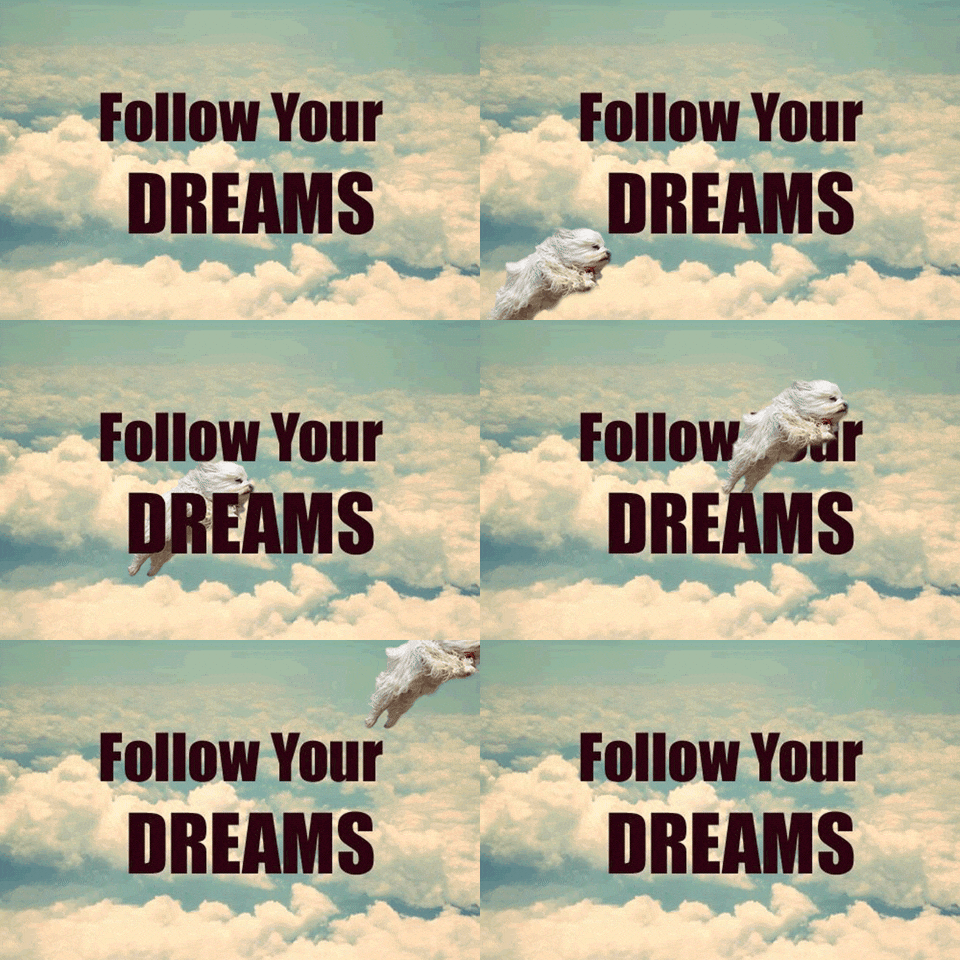
There's something about the phrase "following my dreams," that makes me weirdly uncomfortable. In the moment, I'll appreciate the sentiment from the well-wisher, certainly, but it's still something that's weighed on my mind, why I have an aversion to the phrase and why I find it so unsettling.
Here's what I've come up with so far:

There's something about the phrase "following my dreams," that makes me weirdly uncomfortable. In the moment, I'll appreciate the sentiment from the well-wisher, certainly, but it's still something that's weighed on my mind, why I have an aversion to the phrase and why I find it so unsettling.
Here's what I've come up with so far:
- The phrase has been cheapened: I have seen "follow your dreams" on enough bumper stickers and murals and inspirational pandering to be a bit sick of it. I have heard folks refer to working toward their dream job and enough other similar places that it has lost meaning to me.
- Personal bias: I had a dream car. It was a yellow VW Bug. Drove it for the last year of high school and all through my years at Knox and into ISU--unfortunately, I hit a patch of black ice one winter and tried to make friends with a semi truck, but it was a good little car to the end. However, I distinctly remember my father saying something to the effect of "now you have nothing to look forward to!" when we bought it. A joke, yes, but something still to ruminate on. I have no other "dream car" lined up nor a push to get any other specific car in the future.
- "Dream car/job/house/etc." is too concrete for me (personal bias II): I recognize through my own experience that life can turn a lot of sharp, sudden corners. I had thought I was going to be a high school teacher--my health needs broke that timeline. I will always teach, just not in the context I had thought. What does that mean? A dream is a checkbox. A concrete, resolute thing. I don't much like concrete things--Andy has no small amount of consternation trying to get me to a simple yes/no statement at times, for the ways that I will try to leave space for odd contingencies. For example: "What's your favorite color?" "Depends on what I'm looking at." "Do you like tacos?" "Most of the time, yes." "Would you like to go out for dinner tonight?" "That will probably work." "Can you give me a straight yes or no?" "It's possible." There's a lot of grey in the world; I like to acknowledge it where I can. More on this in a moment.
- Not everyone has a checkbox dream: There are some people who have always known what they want to do and be in their life. Great for them--I'm excited for them. There are others that feel like they are inadequate for not feeling the same. I don't want to encourage that feeling of inadequacy, when everyone may have a different path for how they approach life, career, love, and all else.
So, I prefer to say that I don't have dreams, that I have aspirations. I know that the denotative level doesn't have a lot of difference, perhaps, but connotatively the way I see it a "Dream X" is a firm something whereas an aspiration is a direction, an ideal to aim for. Dream X fits in a box. Aspiration is allowed to grow and change with time and circumstances. In Project Management terms, a dream is the client coming to you saying "I want X and it should perform like Y and look like Z," and an aspiration is "the problem we need to solve for is X; what ways can we solve it?" to find a new solution that works best for the most people in a new way that no one had created before.
I have an aspiration to help folks and in particular to show compassion to persons with ostomies and/or other traumatic life changes associated with medical trauma, including a level of advocacy. The rough shape I have in mind for meeting this entails becoming a nurse. But if tomorrow I'm hit by a bus and could no longer perform the role of nurse as a result, I would still find a way to meet the looseness of the aspiration. The shape would change, but the ideals and the goal are perfectly intact. I don't feel like a "dream" covers that space.
I want my future to be liquid. A liquid bends and curves and moves with the changes. A solid crumbles with time or cannot fit quite so well around certain corners. My trauma has taught me not to trust the path to be clear and free (while still trying to make safety nets for emergencies as possible), but at the same time, I usually am quite certain what at least the next step is. This has been a pattern for me, not knowing the destination but having a relatively firm direction on the next step. It allows for pit-stops as needed; it allows for a tangent as needed; it allows for drastic reshaping; it allows for a freer schedule to let serendipity happen or respond to problems as need arises.
In other words, the work won't be over when I get my BSN. The work won't be over if/when I get my WOC certification. The work won't be over when I have a position as a nurse that allows me to utilize said certification. Rather, I will hopefully be empowered to find that next step to better meet the needs of others, meeting a particular need in myself.
 |
| Okay, I don't know the context of this at all, but it made me smile. |
BONUS SLOTH GIF
Tuesday, May 12, 2020
BTS: Nursing Prep
I mentioned in a previous blog post that this whole process of getting into the ISU nursing program had a number of steps. Let's hit the highlights with a bulleted list!
- Applied in February of 2018
- Found out I was accepted into the accelerated program in August 2018
- I was missing four of the prerequisites that I would need before program start, May 2019 in theory meaning two courses per semester on top of full-time work
- Andy had just changed jobs--based on that and obligatory pace of the remaining prerequisites, it made sense to defer and I declined to take part in the program that year
- Resolved to reapply February 2019, but started remaining prerequisites through Heartland Community College, one class per semester until theoretical new start (since there was no guarantee to be accepted again nor option to defer)
- Reapplied in February 2019
- Bought a house
- Manager above me retired--applied for that position
- Accepted the manager position in August 2019
- Two weeks later, was offered a spot in the 2020 accelerated nursing program
- Paralysis of indecision--it was a really sucky week
- Put in my grateful acceptance into the program, having finally given myself permission to pursue what was right for me; mentally started preparing myself for the emotional changes ahead
- Continued to work through remaining missing prerequisite courses around work schedule
- Paid off all of our remaining student debt (yes, with full knowledge that we would be incurring student debt all over again)
- More math; lots of math and spreadsheets
- List of necessary health and other requirements steadily worked through, including booster shots, new vaccinations, forwarding of historical vaccination records, TB test, and CPR class
- Orientation meeting in January with additional information dump prior to program start
- Ordered my first set of scrubs with ISU patches
- Drug test and criminal background check--in the drug test, I was initially told I was "too hydrated," which I think has only been said to three people in the world ever (I normally aim for three liters of water a day...)
- COVID-19 changed my in-person class to an online class and my in-office job to a remote job
- Attempted to sign up for classes for that first summer semester, which involved eight emails and a couple of phone calls to sort out what the hell was going on
- Cried internally when paying for the first load of textbooks, for several reasons--my back, my wallet, and my excitement
- Made the news known at work
Being able to tell my coworkers and higher-ups sucked, definitely, but it was also very freeing. I value transparency--at work, I preach it wherever relevant. So to be preaching transparency while also holding back this huge part of my life and myself, I have been feeling inauthentic for months now, and especially as May 2020 steadily moved closer. I couldn't really blog about it without breaking some serious social protocol or otherwise playing my hand sooner than I wanted to do, which means I have been denied one of my best processing tools in parts of this transition. I have written out some pieces (though now largely irrelevant) or talked a few things through with a few trusted sources, but mostly I have been working to catch up on some of this processing now.
What's particularly tough about this, though, is that we've been preparing for a significant life change all of this time, for years now. In my mind, I've been comparing it to pregnancy: preparing the space, gathering all of the tools that we'll need, putting our financial affairs in the best order that they could be, finishing any projects that we could beforehand (or otherwise establishing priorities), going to a few extra doctor appointments to ensure that all parts of me that could be addressed were addressed, and emotionally trying to prepare for life to be different after a specific day arrives. Just without a socially acceptable space or way to talk about it--society at large has patterns for how to properly be happy for someone that is expecting, but this doesn't translate necessarily well to folks embracing other changes in their lives. I am changing a few parts of my identity, becoming more of who I am. There's a lot yet to process with that.
Here's how it starts: leaving work on Wednesday, attending orientation on Friday, and then classes starting on Monday!
And there will be many stories yet, my friends.
Tuesday, May 5, 2020
Words and Changing Definitions
So, I want to start today with Bugs Bunny. Or more specifically, Bugs Bunny interacting with Elmer Fudd.
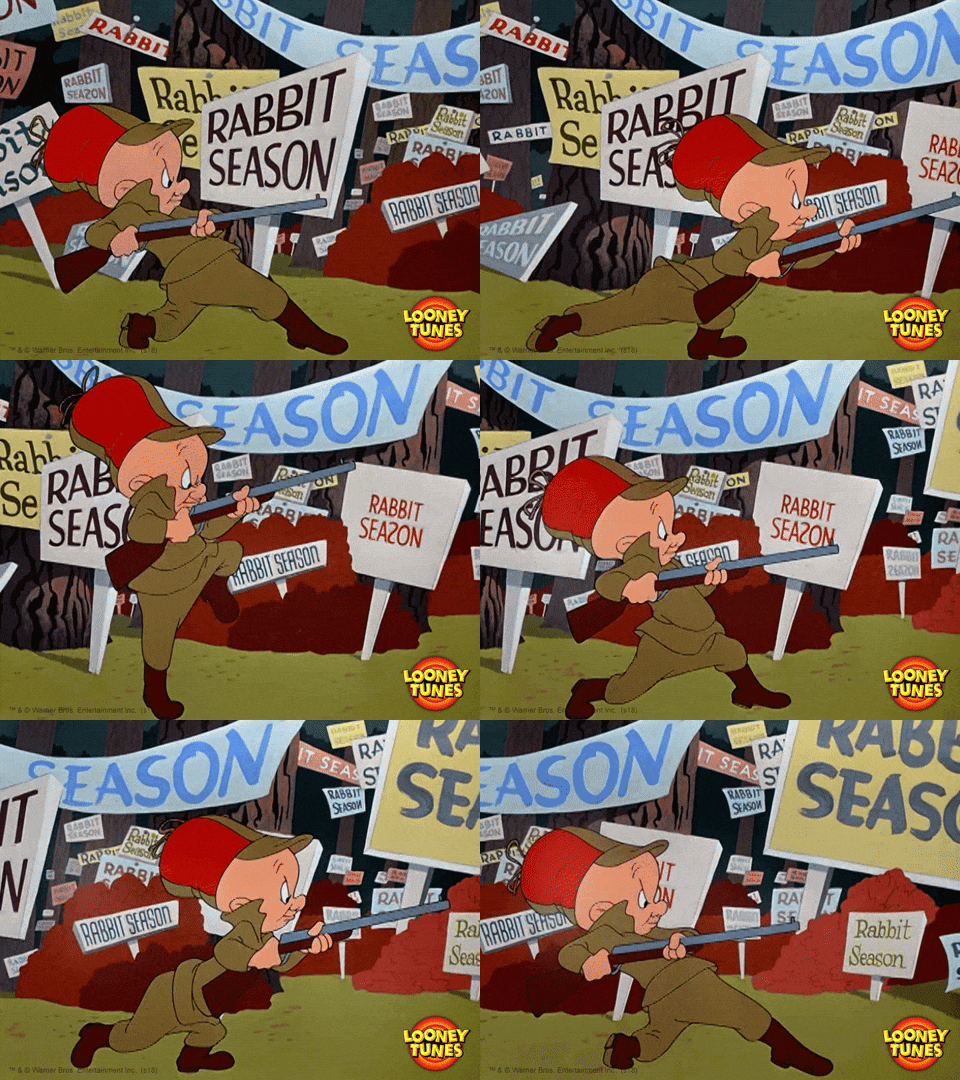 I found a meme recently talking about Bugs referring to Elmer as "nimrod." I remember watching the particular cartoon in question and not understanding that word at the time. I understood that Bugs was some level of disrespectful toward Elmer, meaning that, surely, "nimrod" was foolish or some kind of idiot. The meme explained that this term actually refers to a mighty biblical hunter, meaning that Bugs was actually saying something along the lines of "What are you looking for, hunter?" which is sarcastic, maybe, but not a slur. Basically how Bugs first addresses him in the Wagner opera piece ("Kill the Wabbit") with "Oh mighty hunter of great fighting stock..." is exactly what he's said before, if more floridly.

Just a couple examples, I'm pretty sure neither of these are using it to mean "great hunter." And that continues for the half-dozen other cartoon and show clips I found using the word.
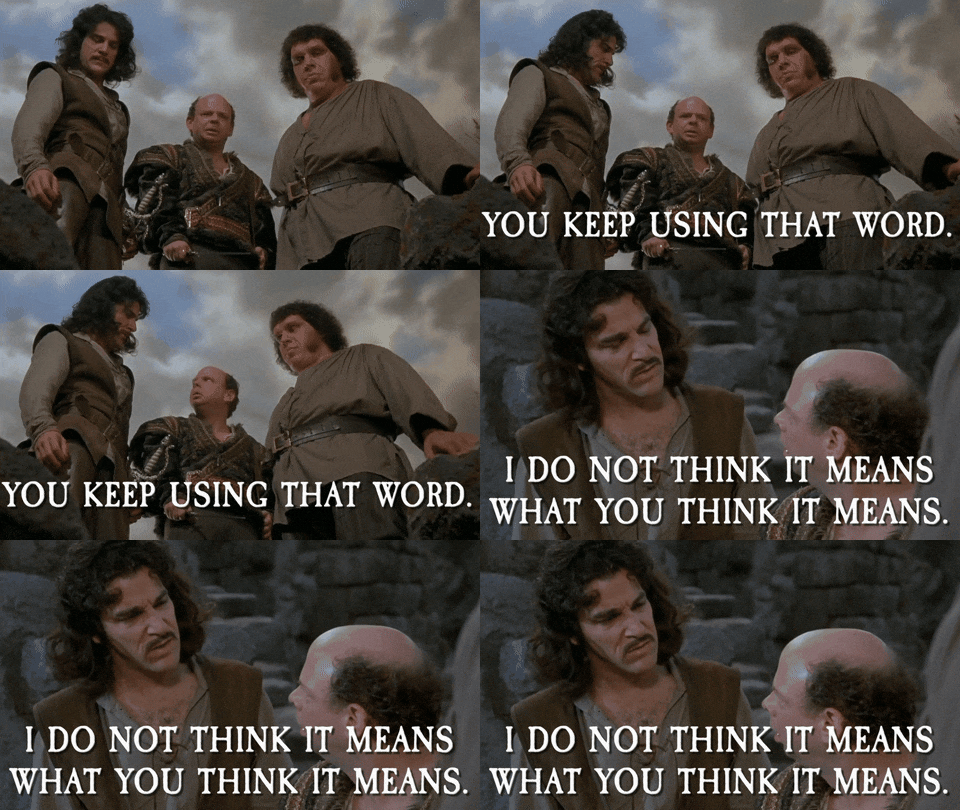
But that doesn't mean that the word, capitalized or otherwise no longer has that meaning. It just means that its context is all the more important. Let's take the word "nonplussed."
 In short, there are two definitions there that mean the exact opposite thing. The word represents both. The context is incredibly important to understand the intention of the word. As a different example, the word "quite" has some sarcastic undertones in the UK, as I understand it, meaning that calling someone "quite pretty" in the Midwest usually means "lovely" but "quite pretty" in the UK seems to be a backhanded way to say "not pretty," but, you know, politely.
What we're getting into, here, is connotative vs denotative language. A word starts with a particular meaning and over time it can develop additional or slightly different meanings. Grammar works this way, too. With enough usage, words get added into the dictionary and grammatical rules loosen in certain contexts. Language evolves. Language moves. The part that is there, in the dictionary or following strict grammatical flow, that's denotative--anyone who is strict on the rules because "thems the rules." The kind that is looking at additional implications or following the flow of how words are spoken by native speakers, that's more connotative. I used to be hardcore denotative, until it was pointed out to me that sometimes those rules are used to reinforce stereotypes and systemic ideas on poverty, class, and race that were not worth clinging to so fervently. In short, I bend to the context--it something needs formal English, it's going to get it; if something is informal for a Facebook post, maybe I don't need to rush in with corrections, provided it's still understandable.
All of this is fascinating to think about, and I want to throw one more very specific example out there.
Theory. Denotatively, it means a proposed explanation for something. Connotatively and colloquially, it's an idea about how something might have happened or come about, one or a couple persons lightheartedly making a simple conclusion or in a crime drama, seriously drawing conclusions based on a few pieces of evidence and active camera shots.
But in science, it means something much different. In a scientific context, it's jargon. It is not as flippant as it is used outside of science. The way we use the word "theory" colloquially is closer to "hypothesis." A scientific theory is a collective of hypotheses that have been tested when possible or using abductive reasoning when it is not. Theories can be refined over time, sure, but a theory has been vetted and is continually vetted by the scientific method. A scientific theory is not "just a theory." It is a scientific theory, but to make things easier we sometimes leave out that important qualifier, which I suspect is how some of this confusion happened in the first place. In short, when we talk about theory in science--a scientific theory--it has a denotative gravitas that is sometimes forgotten in the connotative context. And yet, it does not mean that the gravitas isn't there.
Speaking of gravitas, let's talk gravity. Laws are a step above scientific theory. There are Laws of gravity, that describe how gravity behaves, but how gravity is there in the first place, it's a scientific theory. It's a collection of vetted observations, tested hypotheses, and other evidence to explain how gravity works. I have yet to hear anyone refer to gravity as "just a theory," but we also have flat-earthers in this day in age.
And I'm sure some of you have already connected where some of this argument may have originated: "It's just a theory" is casually thrown against the concept of evolution rather liberally. All this particular argument boils down to is a patent misunderstanding of a piece of scientific jargon. In my head, it's like reducing my diagnosis of Crohn's Disease to "just a tummyache:" it oversimplifies the concept and ideas into absurdity. Scientific theories aren't something to "believe" in--they can have good evidence that needs to be incorporated in to potentially shift parts of the theory, but it's not a matter of belief and unbelief. Scientific theories are used to explain parts of the observable world--science deals with the "how" something works or came to be; philosophy and religion sort with the "why." Different questions, different tools, different words and jargon. Using the same word to mean two different connotations is bound to lead to additional confusion, but to assume that they're always the same is only going to increase confusion.
In short, when I hear the "it's just a theory" argument, I see this in my head:
BONUS ROUND: How do you tell the difference between an electrician and a chemist? Get them to pronounce "unionize."
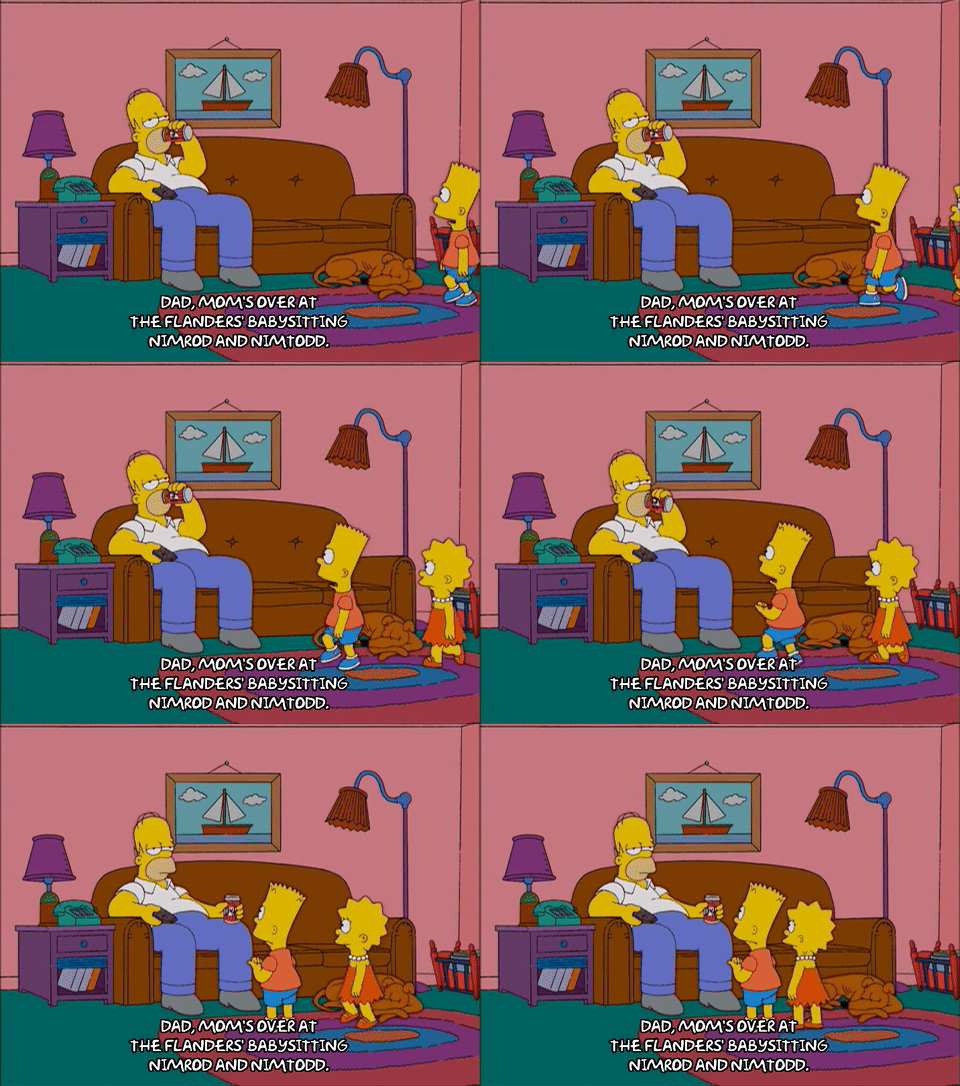

Just a couple examples, I'm pretty sure neither of these are using it to mean "great hunter." And that continues for the half-dozen other cartoon and show clips I found using the word.
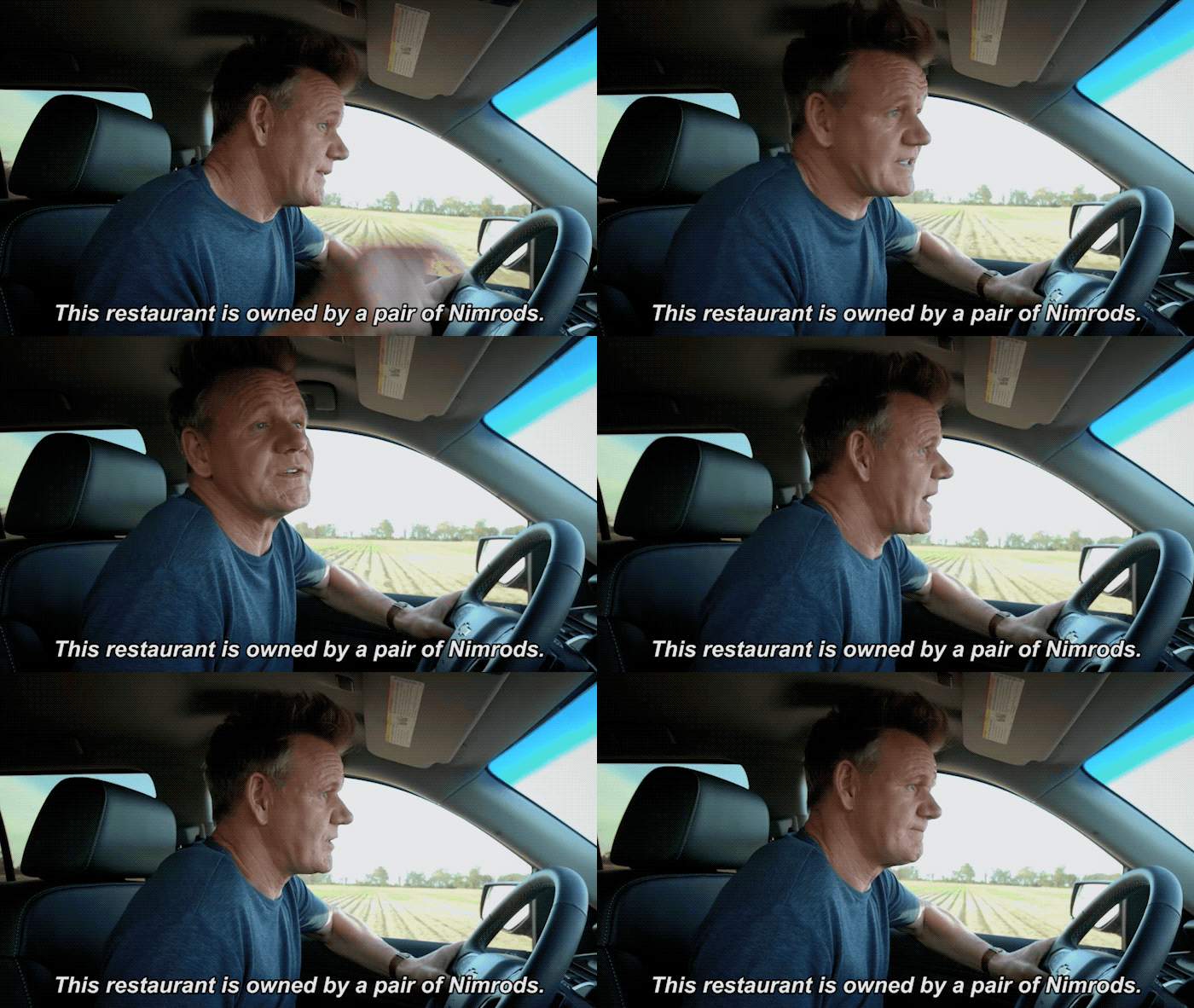
But that doesn't mean that the word, capitalized or otherwise no longer has that meaning. It just means that its context is all the more important. Let's take the word "nonplussed."

What we're getting into, here, is connotative vs denotative language. A word starts with a particular meaning and over time it can develop additional or slightly different meanings. Grammar works this way, too. With enough usage, words get added into the dictionary and grammatical rules loosen in certain contexts. Language evolves. Language moves. The part that is there, in the dictionary or following strict grammatical flow, that's denotative--anyone who is strict on the rules because "thems the rules." The kind that is looking at additional implications or following the flow of how words are spoken by native speakers, that's more connotative. I used to be hardcore denotative, until it was pointed out to me that sometimes those rules are used to reinforce stereotypes and systemic ideas on poverty, class, and race that were not worth clinging to so fervently. In short, I bend to the context--it something needs formal English, it's going to get it; if something is informal for a Facebook post, maybe I don't need to rush in with corrections, provided it's still understandable.
All of this is fascinating to think about, and I want to throw one more very specific example out there.
Theory. Denotatively, it means a proposed explanation for something. Connotatively and colloquially, it's an idea about how something might have happened or come about, one or a couple persons lightheartedly making a simple conclusion or in a crime drama, seriously drawing conclusions based on a few pieces of evidence and active camera shots.
But in science, it means something much different. In a scientific context, it's jargon. It is not as flippant as it is used outside of science. The way we use the word "theory" colloquially is closer to "hypothesis." A scientific theory is a collective of hypotheses that have been tested when possible or using abductive reasoning when it is not. Theories can be refined over time, sure, but a theory has been vetted and is continually vetted by the scientific method. A scientific theory is not "just a theory." It is a scientific theory, but to make things easier we sometimes leave out that important qualifier, which I suspect is how some of this confusion happened in the first place. In short, when we talk about theory in science--a scientific theory--it has a denotative gravitas that is sometimes forgotten in the connotative context. And yet, it does not mean that the gravitas isn't there.
Speaking of gravitas, let's talk gravity. Laws are a step above scientific theory. There are Laws of gravity, that describe how gravity behaves, but how gravity is there in the first place, it's a scientific theory. It's a collection of vetted observations, tested hypotheses, and other evidence to explain how gravity works. I have yet to hear anyone refer to gravity as "just a theory," but we also have flat-earthers in this day in age.
And I'm sure some of you have already connected where some of this argument may have originated: "It's just a theory" is casually thrown against the concept of evolution rather liberally. All this particular argument boils down to is a patent misunderstanding of a piece of scientific jargon. In my head, it's like reducing my diagnosis of Crohn's Disease to "just a tummyache:" it oversimplifies the concept and ideas into absurdity. Scientific theories aren't something to "believe" in--they can have good evidence that needs to be incorporated in to potentially shift parts of the theory, but it's not a matter of belief and unbelief. Scientific theories are used to explain parts of the observable world--science deals with the "how" something works or came to be; philosophy and religion sort with the "why." Different questions, different tools, different words and jargon. Using the same word to mean two different connotations is bound to lead to additional confusion, but to assume that they're always the same is only going to increase confusion.
In short, when I hear the "it's just a theory" argument, I see this in my head:
BONUS ROUND: How do you tell the difference between an electrician and a chemist? Get them to pronounce "unionize."
Tuesday, April 28, 2020
So, I'm Going into Nursing...
This one is going to be a bit stream-of-conscious-y.
It seems that I can't do things small. When I get sick, I don't just get a cold--I get something that will knock my legs out from underneath me and linger in curious ways. Our household has seemed to similarly stack our life transitions one on top of the other. I know that past performance does not guarantee future results, but it is weird for, say, also buying our first house AND suddenly looking for a new car, such as the case was last year.
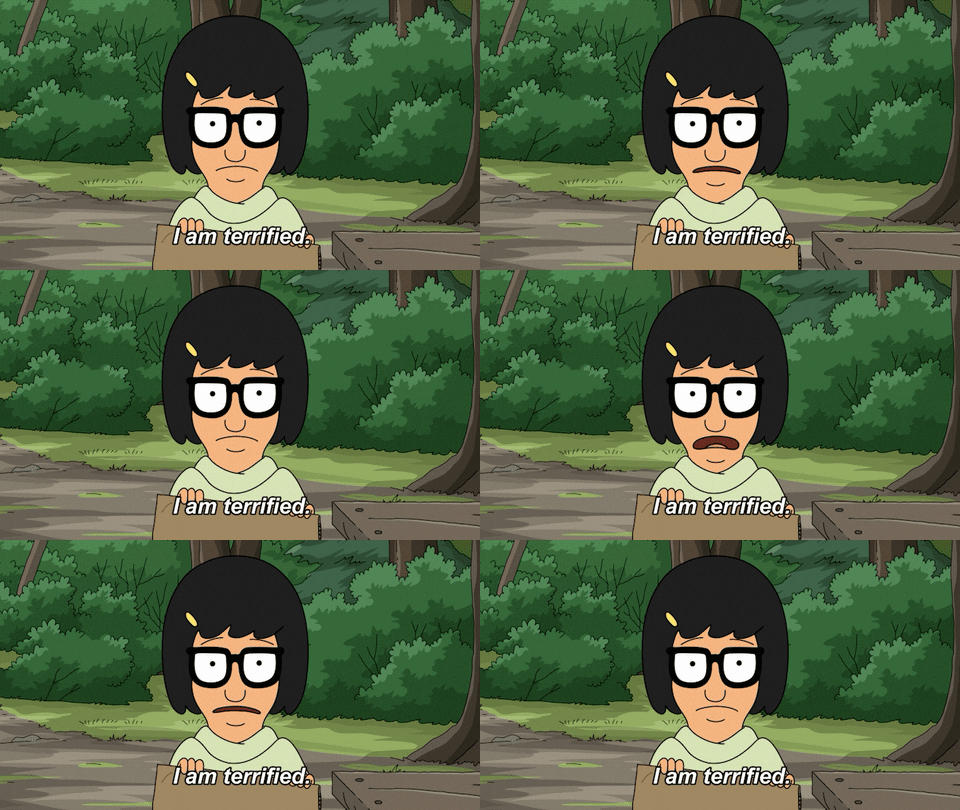
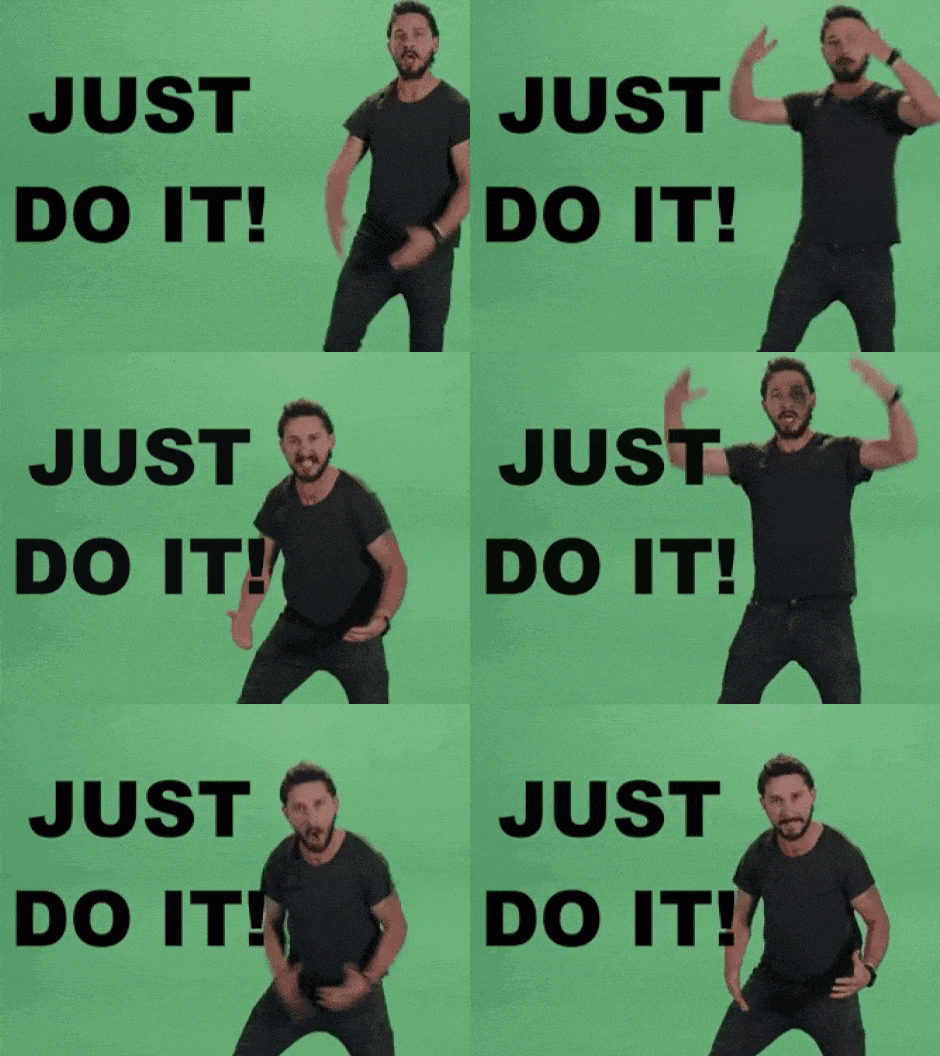
It seems that I can't do things small. When I get sick, I don't just get a cold--I get something that will knock my legs out from underneath me and linger in curious ways. Our household has seemed to similarly stack our life transitions one on top of the other. I know that past performance does not guarantee future results, but it is weird for, say, also buying our first house AND suddenly looking for a new car, such as the case was last year.
So it only makes sense in the middle of a pandemic that I put in my two weeks notice for my job.
Okay, to be fair, I have been planning this for literal years. With many things, I tend to make a decision and then proceed to focus my energy convincing myself to allow myself permission to follow through on that decision, for what sense that makes outside of my brain circuits.
I've been contemplating going into nursing for some time, particularly to be a wound/ostomy care nurse. To be in a place where I can so uniquely express that compassion by identification is singing a clarion call that I had been meeting at least in part through this blog and talking with individuals--this gives me a place to take it that one step further.
And all of that is a highfalutin way of saying I'm ready to move toward a new career.
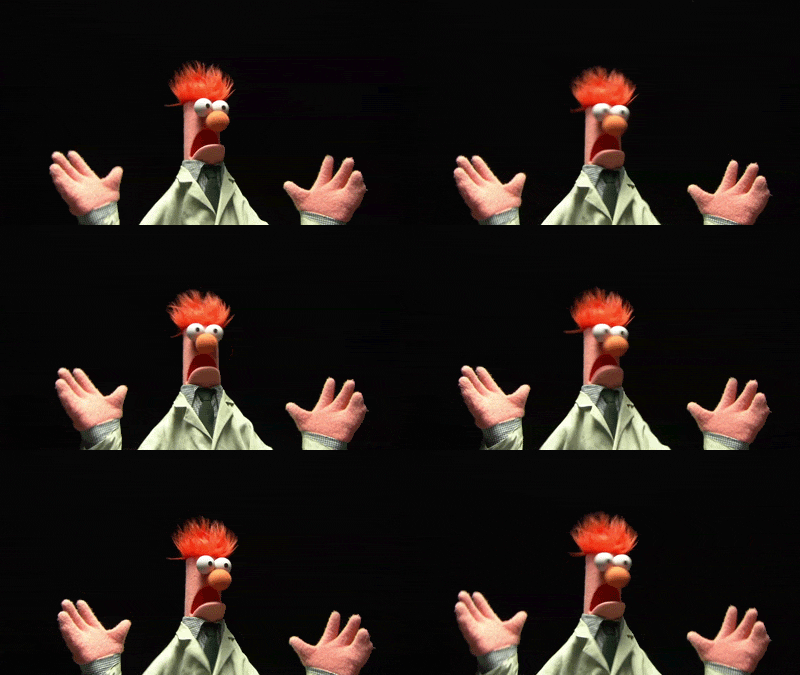 |
| SO MANY FEELINGS |
I have been accepted to the Mennonite College of Nursing accelerated program at ISU. It starts in the summer session. I applied to this a year ago February and found out that I was offered a space in August, two weeks after I had signed all the paperwork for a manager position at Skyward--again, things line up in weird ways for our household.
Truth be told, I had been offered a place the year before--I wanted to take the leap then, but Andy had just moved into different position at Skyward (once again, timing is weird in our household) and we crunched the numbers. We ran and re-ran the math in a dozen and a half different ways: what we found is that by my staying staying one more year and with some intentional pushing, we could be completely done with student loans prior to taking on any new ones, meaning a bit more stability within the uncertainties. We did it. We are Millennial Unicorns and grateful. That we could even contemplate this situation is a privilege.
It was a risk to turn it down that year--there was no guarantee I would be accepted the next year nor any means to defer that spot. It would all be back to the strength of my application. It hurt to turn it down that year, to willingly delay after all the decisions had been landed on, but in many ways we found the timing was right. I also was able to steadily make my way through the remaining prerequisite courses one per semester rather than the alternative of forcing all four in a short time while also working full time. So we knuckled down to a year of steadily eating the elephant of student debt one piece at a time, assessing and reassessing our budget for any places to cinch our belts in further (involving switching our student loan vendor for a lower rate and buying a house to at least lower our monthly housing cost), and otherwise squirreling away whatever we could manage to be as prepared as possible.
My survival voices are VERY upset. I am leaving a place of relative security so that we can go down to one income and incur more student debt in addition to opening myself to all kinds of new stress (good and bad, but unknown regardless). The voices wail: "How could you open up yourself to risk? What the hell are you doing?" The point of those voices is to protect me--they are reactive and they are LOUD--but there comes a point where they're no longer productive. So I have to intentionally take time with those voices, to show the berating, awful din compassion or otherwise help them redirect to a more constructive vein. It's tiring, at best.
I've played this whole transition close to the chest. I've told individuals but hitherto made no mass announcement. I've said before and will say again that preparation against as many plausible concerns as possible is part of how I cope with my medical anxiety and that definitely extends out into our financial situation; whether we can afford my medical needs is certainly a part of that figuring. We've agonized and re-run the math for every different situation under the sun (unfortunately, we have some real experience with how a crisis can play out and how to safeguard as much as possible against it), and yet there comes a point where we just have to jump anyway. My hope was just to make the jump from a lower ledge instead of the summit.
I acknowledge that fear in the same breath I also acknowledge that I am fully confident this is the right next direction for me. I'm sad to leave the people I work with and will miss them immensely. I'm so grateful that there were people in my life that made this decision hard in the right ways. I'm so grateful, too, have the support of those around me.
And now that these parts are finally out in the open, I can even let myself begin to feel the weight of my own excitement. There will be many hijinks ahead (and some I may need to catch you up on). Stay tuned!
Tuesday, April 21, 2020
Just World Fallacy
I ran into a fascinating term the other day that put some thoughts into a new clarity and context that I didn't have prior to. Naturally, I would like to share it with you.
Sometimes, when I'm discussing politics or public needs in the world around us, there's an interesting gap that I have encountered, a place where empathy seems to disintegrate in ways that I have found infinitely frustrating. But I have found at least a pattern to some of it.
Let's take, for example, a light subject: poverty. I reject the idea that persons who work certain jobs "deserve" to be poor and should just "find a better job" if they don't want to be poor. Poverty is a cycle. It's much more complex than the occasional piece of avocado toast, a latte, a haircut, or a manicure--sometimes a small treat is one nice thing to tide you over, and the complete abstention from all "unnecessaries" does NOT, in point of fact, magically pull people out of that cycle. Spending twenty dollars on yourself when you've resigned to never paying off that medical debt or student debt that's in the triple digits, it's something that gets you through the day and isn't going to much impact some of those larger problems.
That's my side of the argument, at least. However, more than once I find a retort already forming in the comments section about how these people got themselves into that situation and should "just pull themselves up by their bootstraps." This ignores a lot of systemic issues, instead focusing the blame on the individual. When assistance is proffered, it can often range toward that particular individual in some particular case--not dealing with the root of the problem in the world around us. In short, there's this odd, prevailing idea that these persons deserve to be in the position that they're in.
An argument could be made in a small handful of cases, maybe, where poor decisions contributed to a current financial distress--they certainly exacerbate an existing concern--but the bulk of people are one bad day away from the same situation. A cancer diagnosis, losing insurance after getting laid off at work, and no amount of bootstrap-pulling is going to magically make that go away overnight.
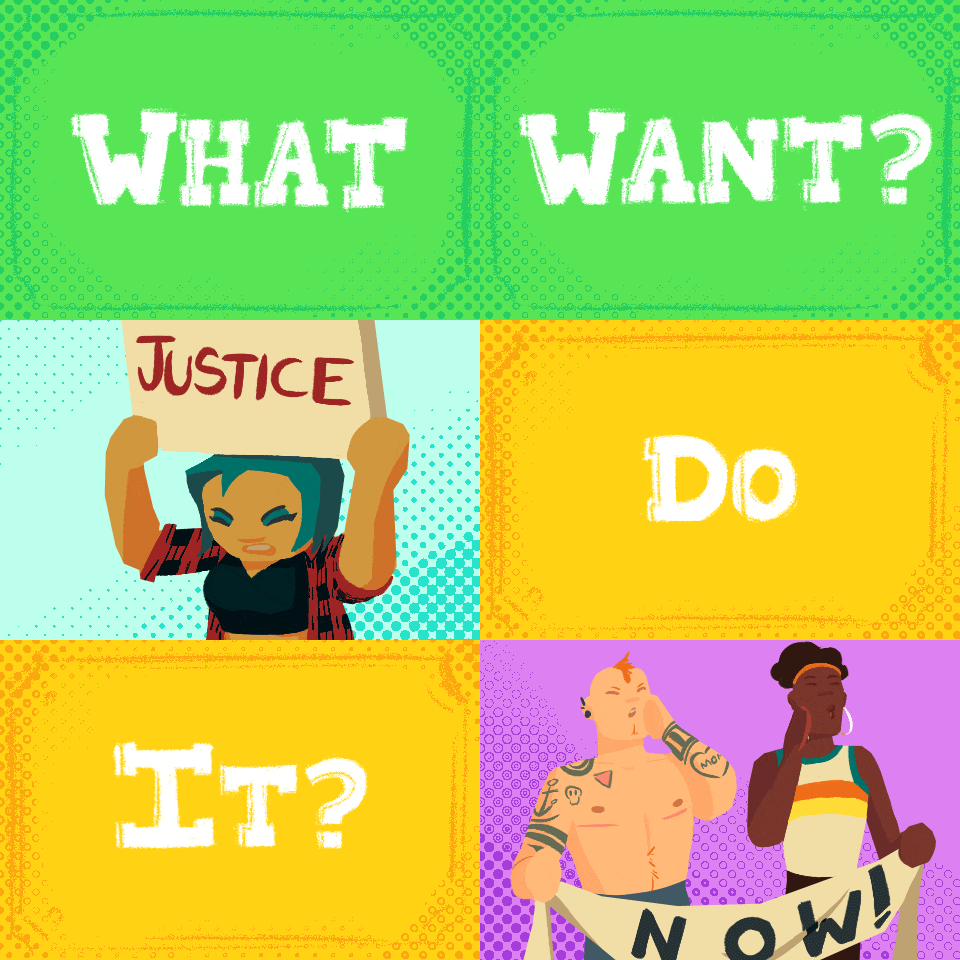
But we want to believe that poverty, homelessness, and illness only happen to those that deserve it. Fairness is something that we want to believe is inherently present in all situations. The tendency to believe that someone is suffering mostly or only because of their own evil/poor choices is called the Just World hypothesis or when used in an argument the Just World fallacy. We want good people to succeed and bad people to be punished or at least not succeed. Even animals have an inherent idea of fairness. Whether you call it karma or divine justice or destiny or order, we tend to want it to be there and be real in all situations. This can, in turn, affect how we see different situations--Bezos is a billionaire, so we want to assume he's a good person, particularly when he gives his equivalent of pocket change to a charity of his choice; similarly, assumptions are made that a homeless person on the street probably did something terrible to deserve to be in that position. Maybe we don't have that exact conversation in our brain, but we as a collective can still act as though it's already assumed. Ever heard someone say of someone that they "didn't deserve to die that way" or "he/she/they got what they deserved"? The assumption is hanging out quietly in the background until we draw attention to it again.
If your response to a victim is "well, what did you do to deserve it?" in any rephrasing thereof, you're expressing the Just World fallacy. Not only is this an erroneous stance to assume--because we know that "good" people fall and "bad" people rise in all kinds of practical examples around us--but it strips empathy out of the equation. There's a difference between understanding the consequences of ones actions and assuming that everything that happens in this crazy world is a directly related consequence of their actions. A natural disaster, a new diagnosis, systemic problems (poverty, racism, sexism, ableism, etc), or splash damage from someone else's decision making, these are primarily outside of individual control. We can take onus as a society to change or prepare against the larger things--that would make the world more just for everyone, at least. But we cannot ignore other factors to assume that everyone's misfortune clearly must be of their own making.
People want to believe in this kind of justice, I find, as a protection mechanism, that "I'm a good person, so I'll be fine" line of thinking that they hope to will into being. Or it's a different kind of protection mechanism, one that seeks to absolve the observer from any obligation to become part of the solution--in other words, it's easy to say "not my problem" if we instead assume all situations are purely the fault of the victim/beneficiary. We have agency. We have the ability to make the most of our circumstances. We also have to acknowledge both the chaos of the universe and systemic problems that are factors into extreme situations. To live together is to also consider what effect we have on other people.
If we want justice to be served, are we working toward a world it can be or assuming it's already here despite significant evidence to the contrary? If we want to keep believing in a Just World hypothesis, they we need to create a world where it could be more possible. Be the hands and feet and voice for those that cannot, for what is right.
Sometimes, when I'm discussing politics or public needs in the world around us, there's an interesting gap that I have encountered, a place where empathy seems to disintegrate in ways that I have found infinitely frustrating. But I have found at least a pattern to some of it.
Let's take, for example, a light subject: poverty. I reject the idea that persons who work certain jobs "deserve" to be poor and should just "find a better job" if they don't want to be poor. Poverty is a cycle. It's much more complex than the occasional piece of avocado toast, a latte, a haircut, or a manicure--sometimes a small treat is one nice thing to tide you over, and the complete abstention from all "unnecessaries" does NOT, in point of fact, magically pull people out of that cycle. Spending twenty dollars on yourself when you've resigned to never paying off that medical debt or student debt that's in the triple digits, it's something that gets you through the day and isn't going to much impact some of those larger problems.
That's my side of the argument, at least. However, more than once I find a retort already forming in the comments section about how these people got themselves into that situation and should "just pull themselves up by their bootstraps." This ignores a lot of systemic issues, instead focusing the blame on the individual. When assistance is proffered, it can often range toward that particular individual in some particular case--not dealing with the root of the problem in the world around us. In short, there's this odd, prevailing idea that these persons deserve to be in the position that they're in.
An argument could be made in a small handful of cases, maybe, where poor decisions contributed to a current financial distress--they certainly exacerbate an existing concern--but the bulk of people are one bad day away from the same situation. A cancer diagnosis, losing insurance after getting laid off at work, and no amount of bootstrap-pulling is going to magically make that go away overnight.
But we want to believe that poverty, homelessness, and illness only happen to those that deserve it. Fairness is something that we want to believe is inherently present in all situations. The tendency to believe that someone is suffering mostly or only because of their own evil/poor choices is called the Just World hypothesis or when used in an argument the Just World fallacy. We want good people to succeed and bad people to be punished or at least not succeed. Even animals have an inherent idea of fairness. Whether you call it karma or divine justice or destiny or order, we tend to want it to be there and be real in all situations. This can, in turn, affect how we see different situations--Bezos is a billionaire, so we want to assume he's a good person, particularly when he gives his equivalent of pocket change to a charity of his choice; similarly, assumptions are made that a homeless person on the street probably did something terrible to deserve to be in that position. Maybe we don't have that exact conversation in our brain, but we as a collective can still act as though it's already assumed. Ever heard someone say of someone that they "didn't deserve to die that way" or "he/she/they got what they deserved"? The assumption is hanging out quietly in the background until we draw attention to it again.
If your response to a victim is "well, what did you do to deserve it?" in any rephrasing thereof, you're expressing the Just World fallacy. Not only is this an erroneous stance to assume--because we know that "good" people fall and "bad" people rise in all kinds of practical examples around us--but it strips empathy out of the equation. There's a difference between understanding the consequences of ones actions and assuming that everything that happens in this crazy world is a directly related consequence of their actions. A natural disaster, a new diagnosis, systemic problems (poverty, racism, sexism, ableism, etc), or splash damage from someone else's decision making, these are primarily outside of individual control. We can take onus as a society to change or prepare against the larger things--that would make the world more just for everyone, at least. But we cannot ignore other factors to assume that everyone's misfortune clearly must be of their own making.
People want to believe in this kind of justice, I find, as a protection mechanism, that "I'm a good person, so I'll be fine" line of thinking that they hope to will into being. Or it's a different kind of protection mechanism, one that seeks to absolve the observer from any obligation to become part of the solution--in other words, it's easy to say "not my problem" if we instead assume all situations are purely the fault of the victim/beneficiary. We have agency. We have the ability to make the most of our circumstances. We also have to acknowledge both the chaos of the universe and systemic problems that are factors into extreme situations. To live together is to also consider what effect we have on other people.
If we want justice to be served, are we working toward a world it can be or assuming it's already here despite significant evidence to the contrary? If we want to keep believing in a Just World hypothesis, they we need to create a world where it could be more possible. Be the hands and feet and voice for those that cannot, for what is right.
Tuesday, April 14, 2020
The Fear is Worse than the Danger
It's fun to me to take a conversation and try to track the course of how the group went from point A to point B, how we got from the weather to vampires or wherever else we land. Similarly, I enjoy dissecting whom has instigated what phrase to the rest of the family or friend group. For example, "I feel rotund" is all me after a meal, but Andy has said it so many times that reality has blurred to some degree, there.
Whelp, we have a phrase we use in this household that I know originated with my brother Mike: "the fear is worse than the danger." This is a slight rephrasing of a quote from somewhere (we were trying to find where as I was contemplating this blog post, leaning toward Romance of the Three Kingdoms), and basically what it means is that often the dread leading up to an event is worse than the actual performance or participation in the event itself. There have been times I've needed to have a tough conversation with someone, something that was hard to articulate or by expressing my pain or frustration I risked their embarrassment or possibly even a violently defensive response. In the bulk of these, the anxiety I had prior to the actual discussion was far worse than the actual confrontation.
I definitely have shower conversations. By which, I mean that I will replay an argument or drum up a hypothetical situation in my mind and decide exactly how I would win said argument or situation. I practice parts of these tough conversations and work through what my words ought to be, in order to be succinct but as impactful as possible. Not every conversation gets this treatment--sometimes moments just happen organically, only to be dissected later--but anything that I've at least tossed around as "is it worth it to bring up X?" or an interview or presentations and recordings I have made for work, all of these have a similar rehearsal element.
There's a point where these are helpful, where I can use them to discharge frustration about a situation enough to meet the emotional need. There's also a point where it becomes obsessive and unhelpful. I have shut myself in a room to pace and talk a something out to myself more than once long and enough to where my Fitbit recognized it as a walk, funnily enough. In one recently, that small buzz on my Fitbit was an important reminder that maybe I ought to put that conversation down for a moment and find a different means to channel that energy out. Hence, blog post.
The fear is worse than the danger.
I use that to ground myself. It reminds me that my feelings of dread are still valid, and simultaneously that I need to assess what the real danger is. I have some choice in how much dread I carry in those moments. I can deescalate part of the churning process. It gives me an out, to keep out of the obsession territory.
Part of my anxiety stemming from my medical trauma manifests as extreme preparedness, meaning that I find some comfort as a coping mechanism to be as prepared as possible for different situations. Sometimes, this means planning out how I would extract myself from X situation if I have an issue with my ostomy bag. Sometimes it means ensuring that I have emergency supplies at the ready for four different hypothetical situations. Again, there is a line between when these behaviors are helpful/generate comfort and when they become destructive. I have planned for some weird scenarios that have happened; I have planned for many more that did not, yet was still glad to know that they would be covered if the need arose. There is a point when I have expended more energy planning and packing than I do enjoying the ride--it's about finding that right balance. Not enough preparedness means that I will not be able to focus on the present; too much means similarly that I cannot focus on the present.
So I ground myself as needed: "the fear is worse than the danger." I trust myself, that I'll be able to problem-solve in the moment. I still give myself to tools to be successful therein. I've gotten worlds better at assessing how much repetition and planning is actually helpful to me. I can find peace. I can rein components of that fear in, once I learned how to recognize what was happening.
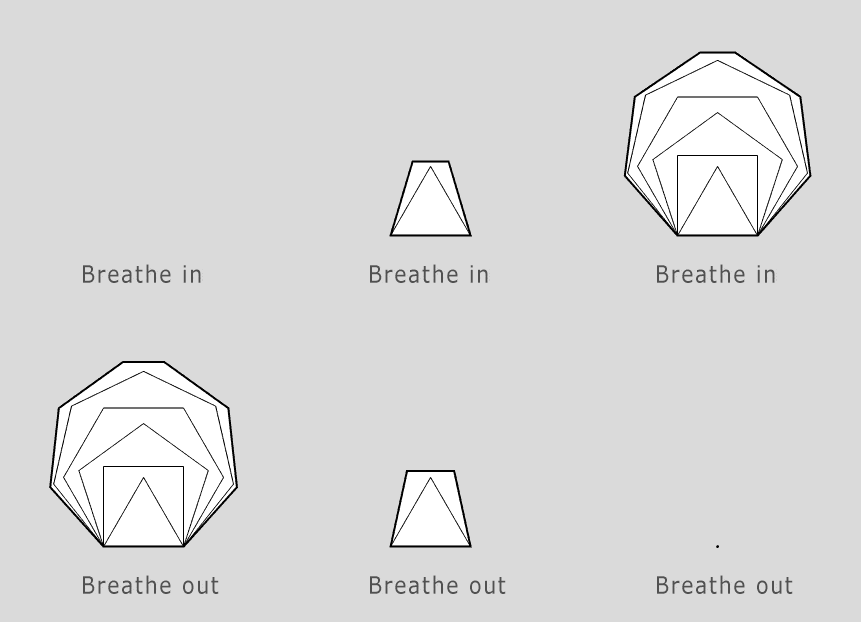
We live in these unstated elements of fear right now, fear that's been there all along but is now more stark and real to a lot of people. The fear of the unknown, fear of loss (of freedom, of loved ones, of security, etc) are very loud at the moment. Is the fear itself worse than the actual danger? It's kind of tough to say when those are the fears in question. But we can slow the churning, calm the cycle from making them any worse than they need to be.
Whelp, we have a phrase we use in this household that I know originated with my brother Mike: "the fear is worse than the danger." This is a slight rephrasing of a quote from somewhere (we were trying to find where as I was contemplating this blog post, leaning toward Romance of the Three Kingdoms), and basically what it means is that often the dread leading up to an event is worse than the actual performance or participation in the event itself. There have been times I've needed to have a tough conversation with someone, something that was hard to articulate or by expressing my pain or frustration I risked their embarrassment or possibly even a violently defensive response. In the bulk of these, the anxiety I had prior to the actual discussion was far worse than the actual confrontation.
I definitely have shower conversations. By which, I mean that I will replay an argument or drum up a hypothetical situation in my mind and decide exactly how I would win said argument or situation. I practice parts of these tough conversations and work through what my words ought to be, in order to be succinct but as impactful as possible. Not every conversation gets this treatment--sometimes moments just happen organically, only to be dissected later--but anything that I've at least tossed around as "is it worth it to bring up X?" or an interview or presentations and recordings I have made for work, all of these have a similar rehearsal element.
There's a point where these are helpful, where I can use them to discharge frustration about a situation enough to meet the emotional need. There's also a point where it becomes obsessive and unhelpful. I have shut myself in a room to pace and talk a something out to myself more than once long and enough to where my Fitbit recognized it as a walk, funnily enough. In one recently, that small buzz on my Fitbit was an important reminder that maybe I ought to put that conversation down for a moment and find a different means to channel that energy out. Hence, blog post.
The fear is worse than the danger.
I use that to ground myself. It reminds me that my feelings of dread are still valid, and simultaneously that I need to assess what the real danger is. I have some choice in how much dread I carry in those moments. I can deescalate part of the churning process. It gives me an out, to keep out of the obsession territory.
Part of my anxiety stemming from my medical trauma manifests as extreme preparedness, meaning that I find some comfort as a coping mechanism to be as prepared as possible for different situations. Sometimes, this means planning out how I would extract myself from X situation if I have an issue with my ostomy bag. Sometimes it means ensuring that I have emergency supplies at the ready for four different hypothetical situations. Again, there is a line between when these behaviors are helpful/generate comfort and when they become destructive. I have planned for some weird scenarios that have happened; I have planned for many more that did not, yet was still glad to know that they would be covered if the need arose. There is a point when I have expended more energy planning and packing than I do enjoying the ride--it's about finding that right balance. Not enough preparedness means that I will not be able to focus on the present; too much means similarly that I cannot focus on the present.
So I ground myself as needed: "the fear is worse than the danger." I trust myself, that I'll be able to problem-solve in the moment. I still give myself to tools to be successful therein. I've gotten worlds better at assessing how much repetition and planning is actually helpful to me. I can find peace. I can rein components of that fear in, once I learned how to recognize what was happening.
We live in these unstated elements of fear right now, fear that's been there all along but is now more stark and real to a lot of people. The fear of the unknown, fear of loss (of freedom, of loved ones, of security, etc) are very loud at the moment. Is the fear itself worse than the actual danger? It's kind of tough to say when those are the fears in question. But we can slow the churning, calm the cycle from making them any worse than they need to be.
Subscribe to:
Posts (Atom)